
 Save to Pinterest
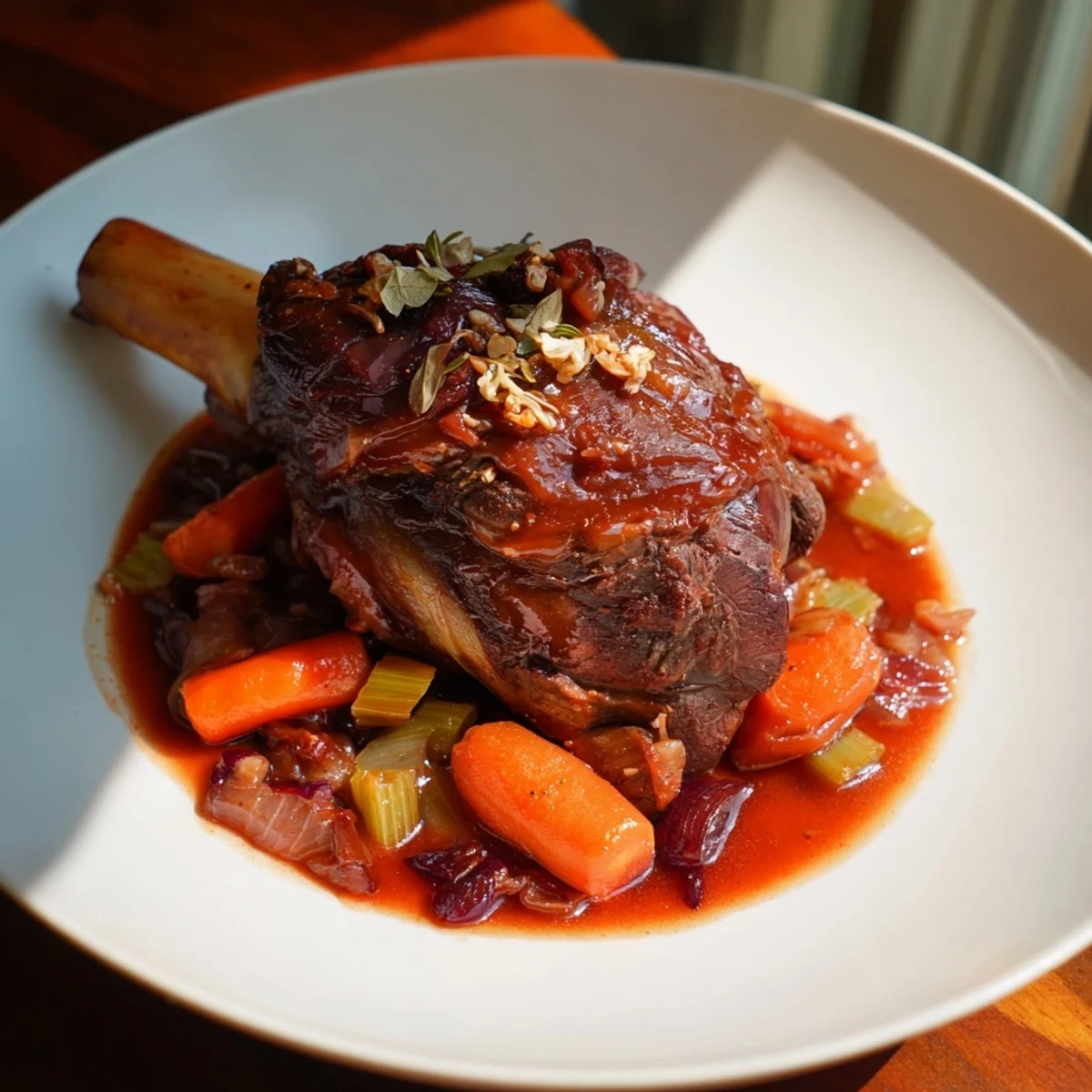
 Experience tender lamb shanks slowly cooked with fresh rosemary, garlic, and a blend of vegetables. Braised to perfection in red wine and beef stock, this dish offers deep, savory flavors and a comforting sauce. Ideal for hearty meals, the meat becomes succulent and falls effortlessly from the bone after hours of gentle braising. Serve alongside creamy mashed potatoes or crusty bread to soak up the rich sauce.
I still remember the first time I made braised lamb shanks—it was a gray Saturday afternoon, and the kitchen smelled incredible after just twenty minutes of prep. My grandmother had always talked about how lamb shanks were the secret to understanding Mediterranean cooking, and I finally understood what she meant when those first bites melted on my tongue. The meat was so tender it barely needed a fork, and the wine-dark sauce had become something entirely its own, rich and complex from hours in the oven while I did absolutely nothing.
I made this for a dinner party last spring when friends were visiting from out of town, and I watched their faces when they took that first bite—that moment when someone realizes they're tasting something genuinely special. One guest asked if I'd trained as a chef. I just smiled and said the oven trained me.
Ingredients
- 4 lamb shanks (about 350–400 g each), trimmed: These are the star of the show, and trimming away excess silver skin matters more than you'd think—it'll help your sauce stay silky instead of getting that bitter edge. Look for shanks that are roughly the same size so they braise evenly.
- 2 large carrots, peeled and sliced: Carrots sweeten the sauce as they break down, which is why they're essential. Don't bother with thin slices—thick rounds hold their shape better and look beautiful on the plate.
- 2 celery stalks, chopped: Celery is the quiet backbone here, adding a subtle earthiness that ties everything together.
- 1 large onion, chopped: The base of everything, and the reason your kitchen will smell like a Tuscan farmhouse.
- 4 garlic cloves, minced: Fresh garlic transforms into something sweeter and mellower after two and a half hours in the oven—that's the magic nobody talks about.
- 400 g canned diced tomatoes: San Marzano if you can find them—they add body and acidity without being too sharp. The acidity matters because it keeps the sauce tasting bright despite all that richness.
- 2 sprigs fresh rosemary: This is the soul of the dish. Don't skip the fresh herbs or use dried rosemary (the flavor goes bitter). Those two sprigs will perfume everything.
- 2 sprigs fresh thyme: Thyme is the quiet partner to rosemary, adding an almost herbal sweetness without shouting about it.
- 2 bay leaves: Bay leaves do something mysterious to a braise—they seem to deepen all the other flavors. You must remove them before serving, though, or you'll hear about it.
- 1 tsp salt, ½ tsp black pepper: Season generously when you sear the lamb—that crust is flavor you can't get back.
- 500 ml beef stock: Use the best stock you can find or make your own. The difference between good stock and mediocre stock is the difference between this tasting restaurant-quality and just fine.
- 250 ml dry red wine: A wine you'd actually drink—not expensive, but drinkable. The wine adds body and complexity that you simply can't fake.
- 2 tbsp olive oil: Use a decent olive oil for searing, not your best extra virgin. Save that for finishing.
Instructions
- Heat your oven and season the shanks:
- Start by getting your oven to 160°C (320°F)—this low, slow temperature is non-negotiable. While it preheats, pat your lamb shanks dry with paper towels and season them generously with salt and pepper. Dry meat sears better, and the crust you're about to create is flavor you're building for the next two and a half hours.
- Sear the lamb until it's deeply golden:
- Heat your olive oil in a large Dutch oven over medium-high heat until it shimmers slightly—you'll know it's ready when a piece of onion sizzles immediately. Place the lamb shanks in the pot carefully and let them sit without moving them. This is hard to do, but it's how you get that gorgeous brown crust. After about four minutes, turn them and repeat on all sides. You're looking for deep golden-brown, almost mahogany in color. This should take about eight minutes total. Remove the shanks to a plate and set aside.
- Build your flavor base with vegetables:
- In the same pot with all those lovely browned bits still clinging to the bottom, add your chopped onion, carrots, and celery. The heat is still medium-high, and you're listening for that gentle sizzle. Stir occasionally and let them soften for five minutes—the onion should be starting to turn golden at the edges. This is the foundation of your sauce, so don't rush it. Add the minced garlic and let it cook for just one more minute until fragrant, being careful not to let it brown.
- Deglaze with wine and build the braising liquid:
- Pour in your dry red wine slowly, scraping the bottom of the pot with a wooden spoon as you go. All those caramelized bits are pure flavor, and you don't want to leave any behind. Let the wine bubble for two minutes—you'll see it reduce slightly and smell the alcohol beginning to cook off. This step matters because it takes the raw edge off the wine and lets it marry with the meat.
- Add the remaining ingredients and return the lamb:
- Now add your diced tomatoes, beef stock, fresh rosemary sprigs, fresh thyme sprigs, and bay leaves. Stir gently, then nestle your seared lamb shanks back into the pot. They should be mostly submerged in liquid—if they're not, add a bit more stock. Bring everything to a gentle simmer on the stovetop, then cover with a lid and transfer to your preheated oven.
- Let the oven work its magic:
- This is the best part about this recipe—you close the oven door and walk away. Set a timer for one hour and fifteen minutes, then check on it. Give the shanks a gentle turn so they braise evenly. They'll need another hour and fifteen minutes. The meat is done when you can almost pull it apart with a wooden spoon, and the sauce has darkened and thickened slightly. Total cooking time is two and a half hours, but most of that is the oven doing the thinking while you do other things.
- Finish and serve:
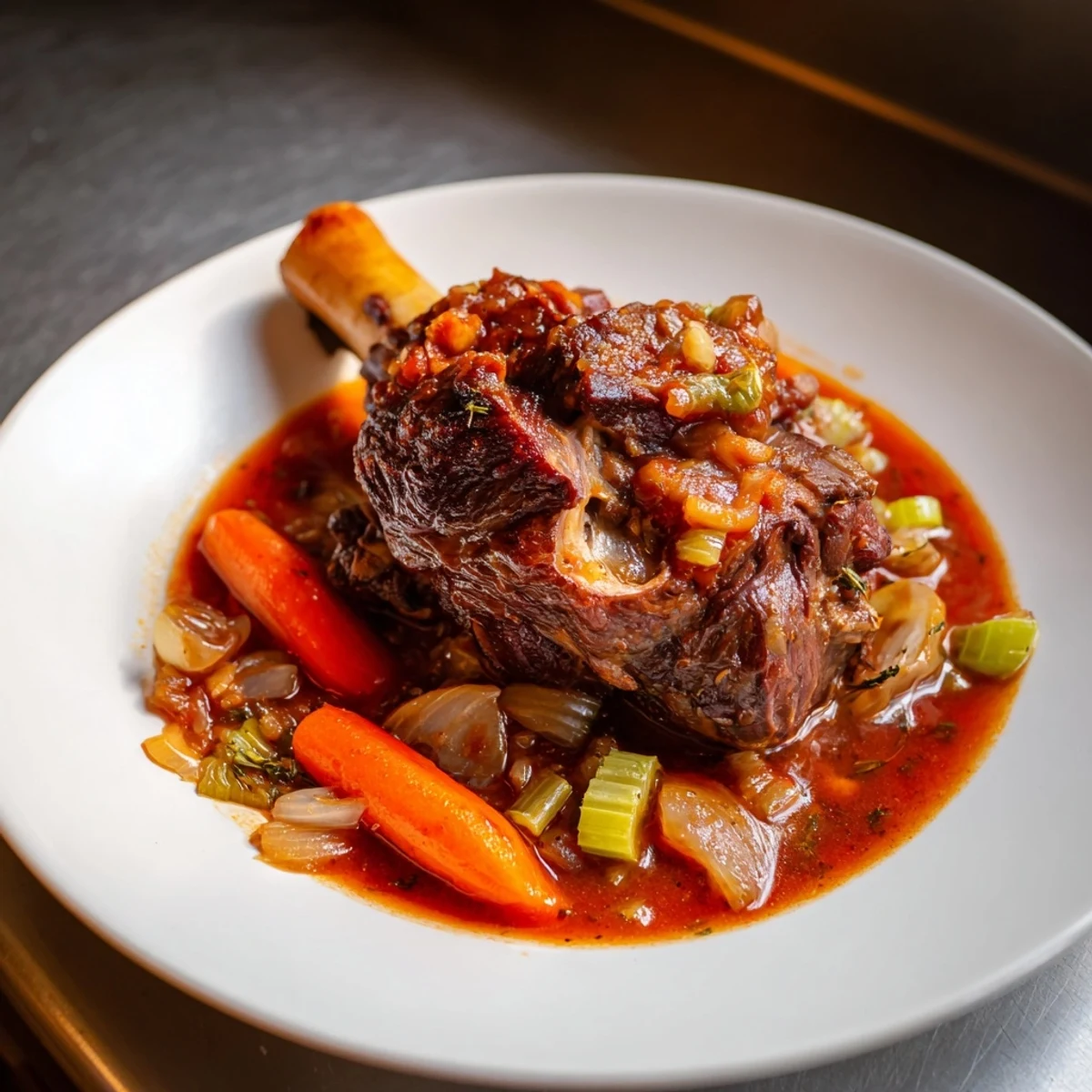
- Remove the pot from the oven carefully—it's incredibly hot. Fish out and discard the rosemary and thyme sprigs and bay leaves. If there's a lot of fat floating on top of the sauce and it bothers you, skim it with a spoon, but a little fat carries flavor and keeps the sauce silky. Taste the sauce and adjust the salt and pepper if needed. Serve the lamb shanks with the vegetables and sauce spooned generously over top.
 Save to Pinterest
 This dish has become my go-to for when I want to feel like I'm taking care of people—there's something about braised lamb that says I planned ahead and put thought into dinner. It's comfort food elevated, the kind of meal that makes people linger at the table and ask for the recipe even though they know they'll probably never make it.
What to Serve Alongside
The sauce is so good that you'll want something to soak it up, and this is where the meal becomes truly special. Creamy mashed potatoes are the classic choice—smooth, buttery, and almost like a sponge for that rich wine sauce. Polenta is another beautiful option, especially if you stir in some butter and Parmesan at the end. Even crusty bread works magic, though there's something less refined about it that feels right somehow. I've also served this over wide egg noodles on nights when I want something a little more elegant, and it's never disappointed. The key is choosing something mild enough that it doesn't compete with the lamb and sauce, something that plays a supporting role to the star of the show.
Making the Sauce Even More Luxurious
Once the lamb is impossibly tender and ready to serve, you have a choice about the sauce. Some nights I like it just as it is—rich, silky, studded with soft vegetables. Other nights I want it even more concentrated and velvety, and that's when I remove the lamb shanks to a warm plate and set the Dutch oven on the stovetop over medium-high heat. Let the sauce bubble and reduce for ten to fifteen minutes, stirring occasionally, until it coats the back of a spoon and looks almost glossy. This step transforms it into something elegant enough for a dinner party, something that looks intentional. If you want it even silkier, whisk in a tablespoon of cornstarch mixed with two tablespoons of cold water after removing it from heat, and let it bubble for just a minute. It's a small thing, but it changes everything about how the dish feels.
Making This Your Own
The beauty of a braise is that it's forgiving and adaptable, ready to become your own version depending on what you have and how you feel. I've made it with beef shanks when lamb wasn't available, and honestly, it's almost as good—slightly different in flavor, but the technique is identical and the results are equally stunning. Some people add a splash of balsamic vinegar at the end, which adds a subtle sweetness that some find irresistible. I have a friend who stirs in a tablespoon of tomato paste with the garlic to deepen the color and add richness, and it's brilliant. Another variation I've loved involves adding a handful of black olives in the last thirty minutes of cooking, which adds a briny counterpoint to all that richness. The core recipe is solid, but your kitchen, your tastes, and your preferences are what will make it truly special.
- Beef shanks are a perfect substitute if lamb isn't available—they'll take the same time and reward you just as well
- A tablespoon of balsamic vinegar added at the end brings subtle sweetness that rounds out the savory depth
- Trust your instincts about taste and adjust the salt and wine according to your preference, not just the recipe
 Save to Pinterest
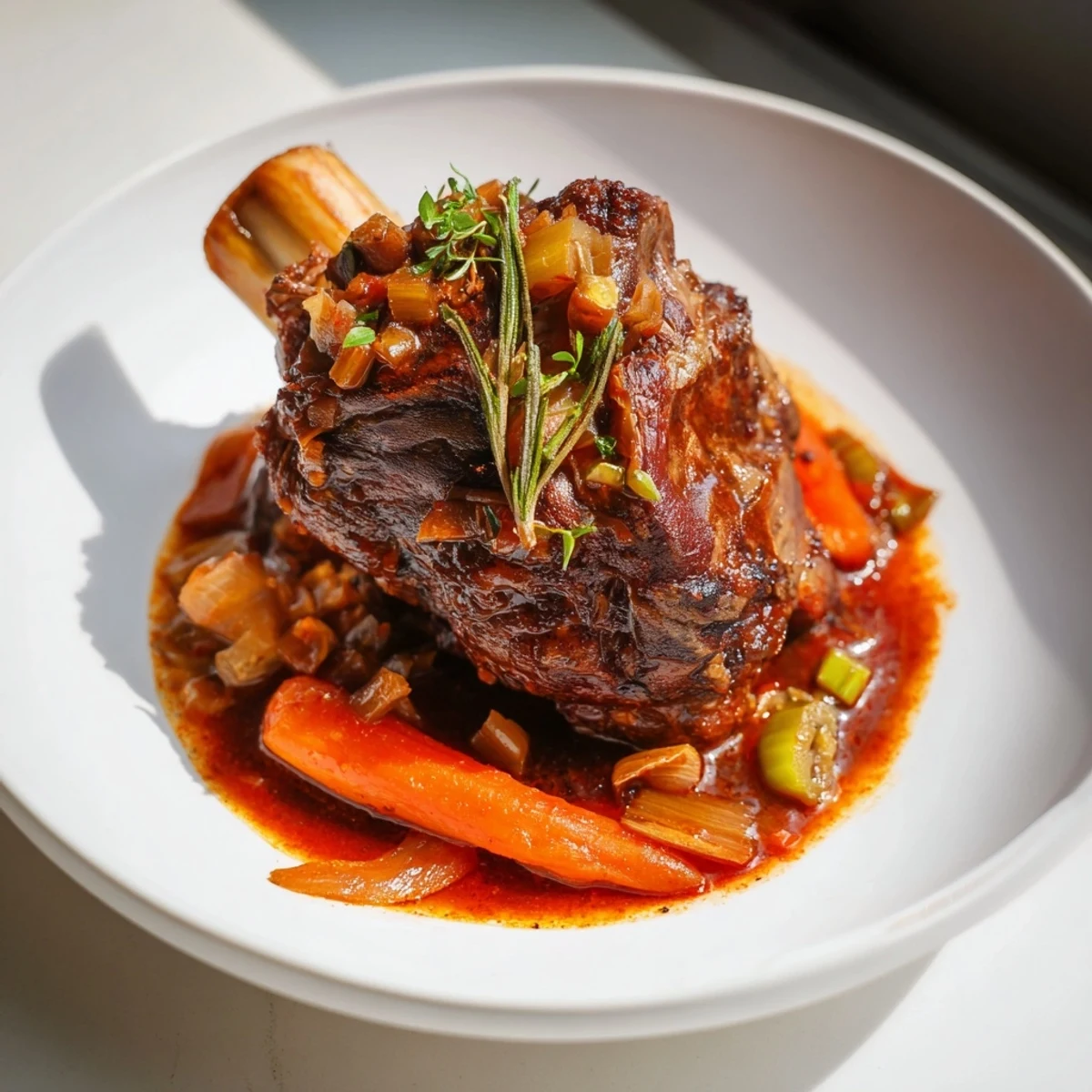
 There's something deeply satisfying about braised lamb shanks, something that speaks to wanting to slow down and do things right. Make this when you have time to enjoy the process, and when you have people around who will appreciate it.
Recipes Q&A
- → What cut of meat is best for slow cooking?
-
Lamb shanks are ideal for slow cooking as the connective tissues break down, resulting in tender, flavorful meat.
- → Why is red wine used in braising lamb shanks?
-
Red wine adds depth and complexity, enhancing the richness of the sauce and tenderizing the meat during cooking.
- → Can I substitute rosemary with other herbs?
-
Thyme or bay leaves can be used as substitutes, though rosemary provides a distinctive aromatic flavor preferred for lamb.
- → How can I thicken the sauce after cooking?
-
Remove the meat and simmer the sauce on the stovetop until it reduces to your desired consistency.
- → What sides complement braised lamb shanks?
-
Creamy mashed potatoes, polenta, or crusty bread work perfectly to absorb the savory sauce.