
 Save to Pinterest
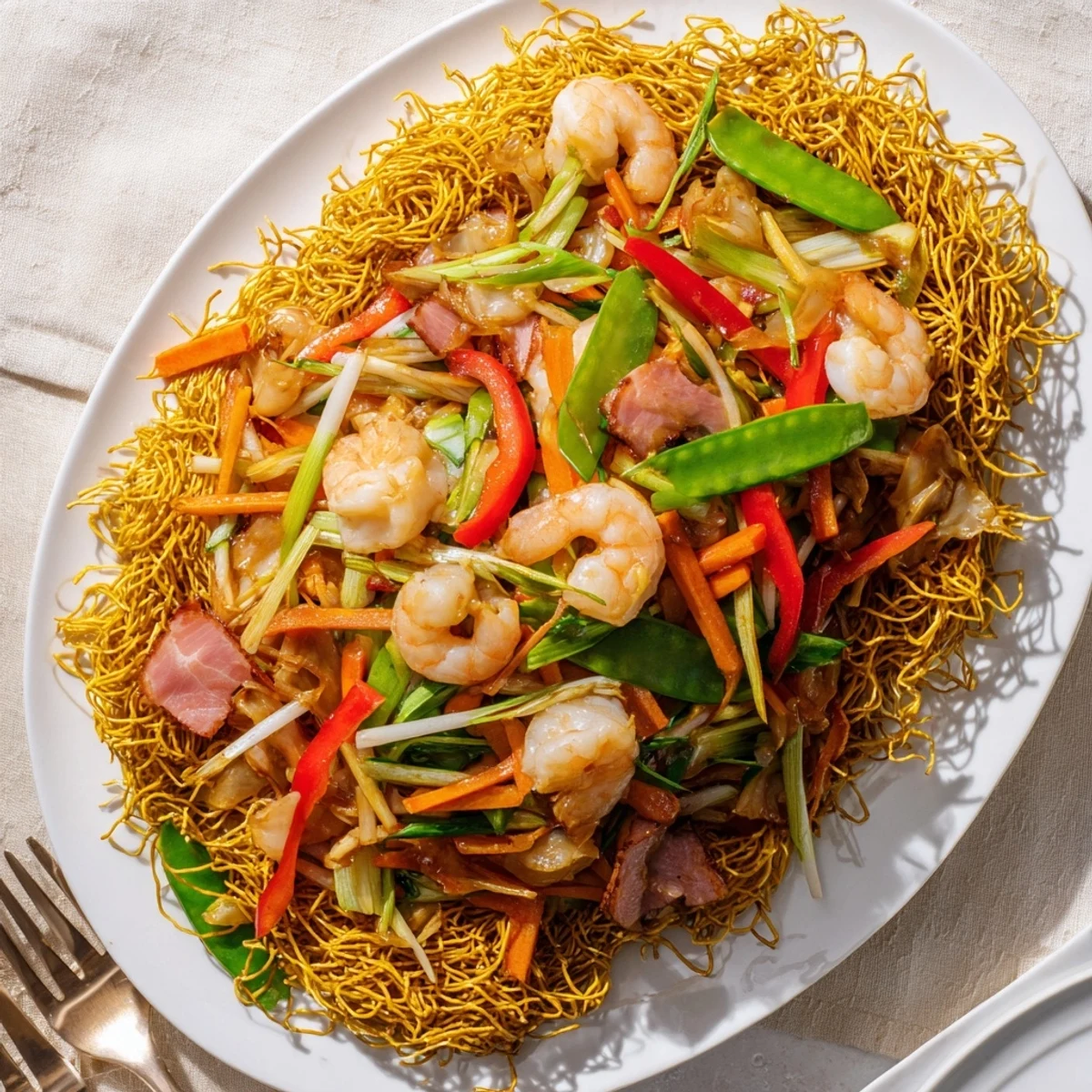
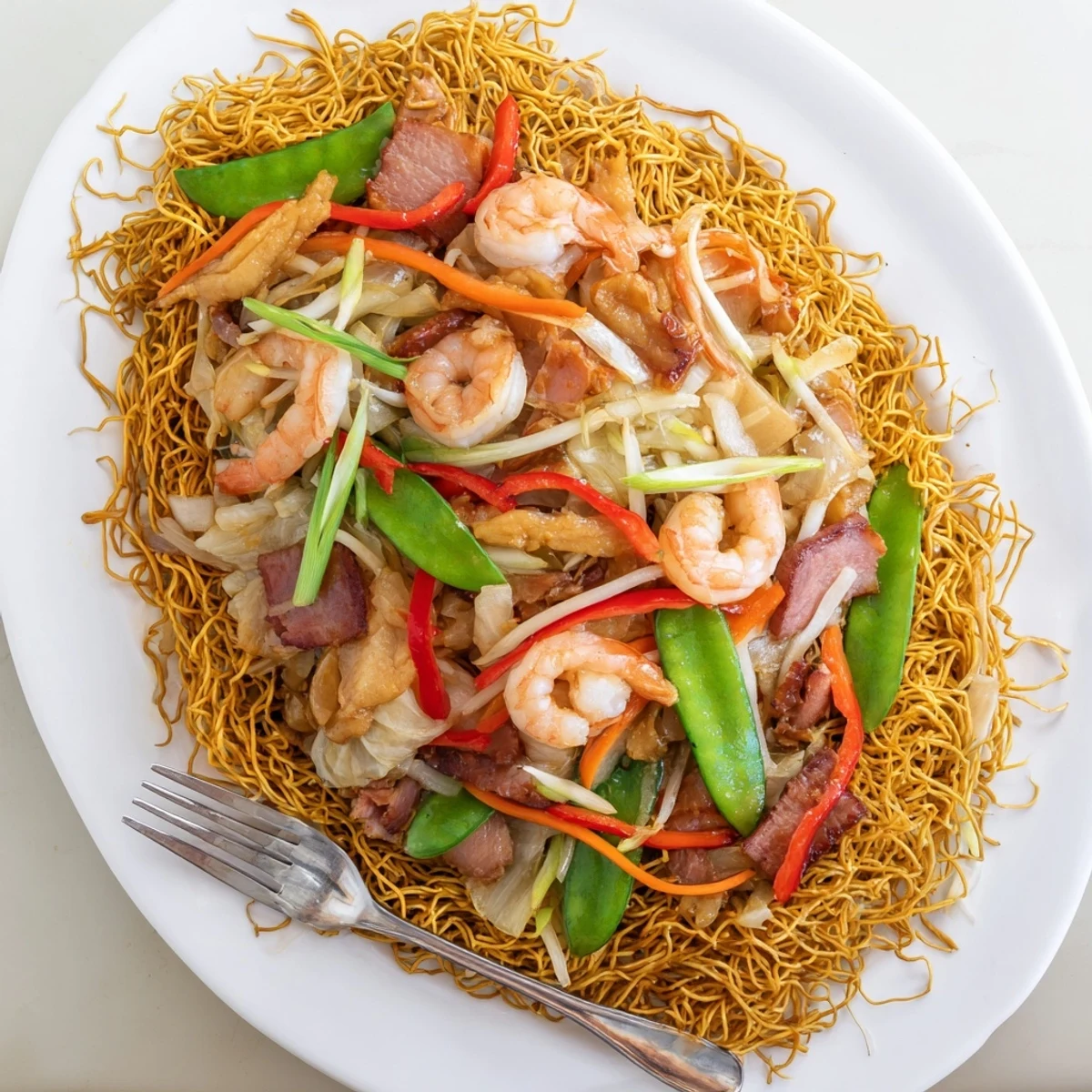
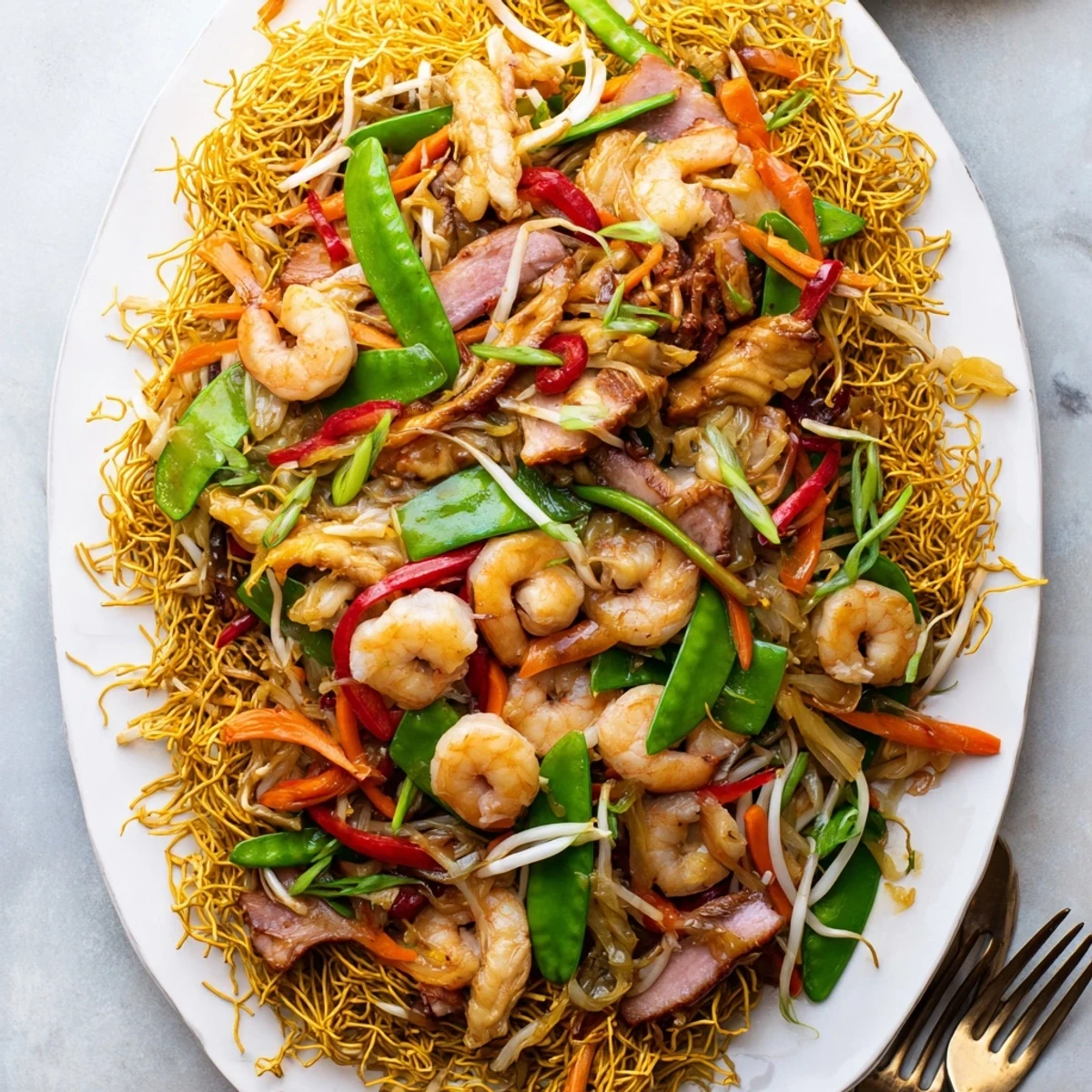
 This beloved Cantonese specialty combines the satisfying crunch of pan-fried noodles with a medley of tender proteins and fresh vegetables. The dish features fresh egg noodles fried until golden and crisp, then crowned with succulent chicken, plump shrimp, and sweet char siu pork.
Aromatic vegetables like julienned carrots, crisp snow peas, and bean sprouts add texture and color, while the classic sauce brings everything together with savory depth. The result is a harmonious balance of textures—crispy, tender, and succulent in every bite.
The wok was hissing so loudly I couldn't hear my own thoughts, and I remember thinking this is what a proper Cantonese kitchen must sound like. I'd been attempting to recreate those restaurant-style crispy noodles for months, ending up with soggy disappointments every single time. Then a friend's grandmother showed me the secret of cooking the noodles separately until they develop that golden crunch, like a noodle pancake. Now it's the one dish my family actually asks for by name.
Last New Year's Eve, I made this for friends who'd sworn they didn't like chow mein because they'd only had the soft, steamed version. Watching their faces when they took that first bite and heard the crunch was absolutely worth every minute of prep. Someone actually asked if I'd ordered it from a restaurant, and I laughed while gesturing at my tiny apartment kitchen.
Ingredients
- Fresh egg noodles: These create the best crust and hold up better than dried noodles when fried
- Chicken breast: Slice it thin against the grain so it stays tender during quick stir-frying
- Shrimp: Fresh shrimp adds sweetness and another texture dimension
- Char siu: Store-bought works perfectly, or use roast pork in a pinch
- Bean sprouts: They provide essential crunch and freshness to balance the rich sauce
- Snow peas: These stay crisp and bright green even after brief cooking
- Light soy sauce: Use this for saltiness and color without overpowering the dish
- Oyster sauce: This creates that velvety, restaurant-style sauce consistency
- Cornstarch slurry: This thickens the sauce just enough so it coats the toppings beautifully
Instructions
- Prep the proteins:
- Toss the chicken and shrimp with soy sauce, cornstarch, and white pepper. Let them sit for 10 minutes while you chop everything else.
- Blanch the noodles:
- Boil them for just 1-2 minutes, then drain really well so they'll crisp up properly.
- Create the noodle base:
- Heat oil in your wok, spread the noodles evenly, and let them get golden and undisturbed for 3-4 minutes per side. This patience is what makes the magic happen.
- Stir-fry the toppings:
- Cook the chicken first, add shrimp until pink, then toss in the char siu and vegetables. Keep everything moving over high heat so nothing overcooks.
- Make the sauce:
- Pour in the soy sauce, oyster sauce, wine, sugar, sesame oil, and stock. Let it bubble, then add the cornstarch mixture until thickened.
- Bring it together:
- Pour everything over that crispy noodle base you made earlier. Serve it right away while the contrast between textures is at its peak.
 Save to Pinterest
 This recipe became my go-to for busy weeknights when I want something that feels special but doesn't take all evening. There's something so satisfying about hearing that first crunch when everyone digs in.
Getting the Right Noodles
I've learned that not all egg noodles are created equal for this dish. The fresh, yellow noodles found in Asian grocery stores work best because they have the right amount of oil and elasticity. Dried noodles can work in a pinch but need longer soaking and tend to break more easily when you flip them.
Mastering the Sauce Balance
The sauce should coat the back of a spoon without being gloppy. I once added too much cornstarch and ended up with something closer to gravy than a glossy stir-fry sauce. Now I add the slurry gradually and stop as soon as it thickens enough to cling to the vegetables.
Timing Your Components
The key is having everything ready before you heat the wok. The actual cooking goes faster than you expect, and there's nothing worse than realizing you forgot to slice the bell pepper while the chicken is already overcooking. I lay out all ingredients on plates in the order they go into the pan.
- Warm your serving platter so the crispy base stays hot longer
- Cut vegetables into similar sizes so they cook evenly
- Have the sauce ingredients measured and mixed before you start
 Save to Pinterest
 I hope this recipe brings as much joy to your table as it has to mine. There's nothing quite like that first bite of crispy, saucy perfection.
Recipes Q&A
- → What makes Cantonese chow mein different from other noodle dishes?
-
Cantonese chow mein features a distinctive two-part preparation where noodles are pan-fried until crispy before being topped with stir-fried ingredients and sauce. This creates a signature texture contrast between the crunchy base and tender toppings.
- → Can I make this dish vegetarian?
-
Absolutely. Simply omit the chicken, shrimp, and char siu. Replace the protein with firm tofu cubes and increase the variety of vegetables. Use vegetarian oyster sauce or mushroom sauce to maintain the savory depth.
- → How do I achieve perfectly crispy noodles?
-
Key steps include thoroughly draining blanched noodles, using enough oil in a hot wok or skillet, and cooking undisturbed for 3-4 minutes per side. Don't flip too early—letting the noodles develop a golden crust creates that authentic crunch.
- → What's the best way to prep ingredients for stir-frying?
-
Have all ingredients sliced and ready before heating your wok. Cut meats and vegetables into uniform, bite-sized pieces for even cooking. Marinate proteins beforehand for maximum flavor infusion.
- → Can I substitute the fresh egg noodles?
-
Thin Chinese wheat noodles work well. For gluten-free options, use rice vermicelli or soba noodles, though the texture will differ slightly. Adjust cooking time as thinner noodles require less blanching.