
 Save to Pinterest
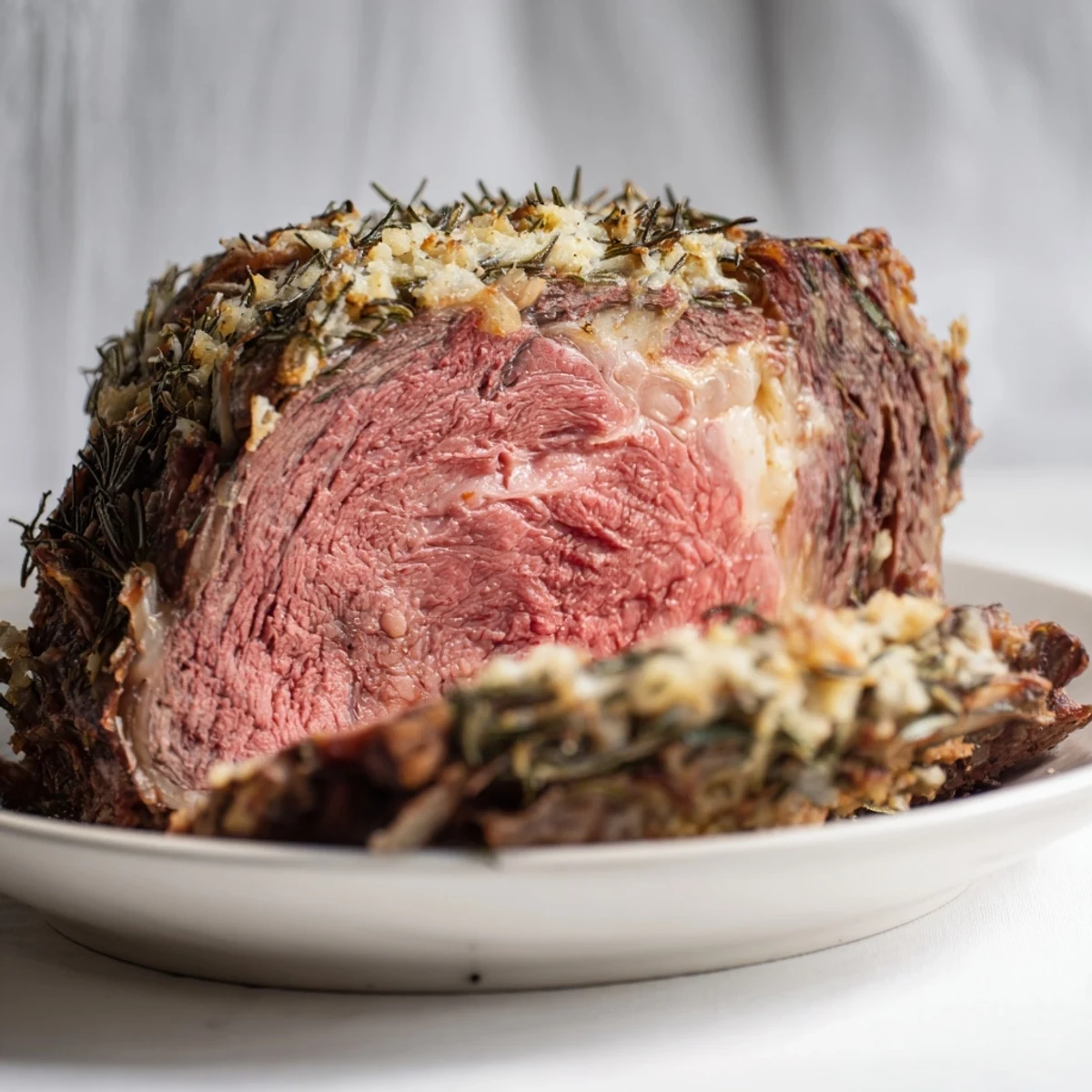
 This prime rib is masterfully roasted with a fragrant garlic and herb paste combining rosemary, thyme, and Dijon mustard. The meat is carefully seasoned and cooked to medium-rare, creating a tender crust and juicy interior. Letting the roast rest after cooking ensures perfectly moist slices, ideal for festive dinners or special gatherings. The preparation highlights natural aromas and rich flavors without complexity, suitable for medium-level kitchen enthusiasts aiming for a memorable centerpiece.
I'll never forget the Christmas Eve my grandfather taught me how to roast a prime rib. His kitchen smelled like rosemary and garlic, and as he showed me how to massage that herb paste into the meat with the confidence of someone who'd done it a hundred times, I realized this wasn't just about cooking—it was about carrying forward something sacred. That night, watching the roast transform in the oven, I understood why this cut of beef has graced holiday tables for generations. It's the kind of dish that turns a regular evening into something worth remembering.
The first time I made this for my family's New Year's dinner, I was terrified. Feeding eight people a cut of beef this expensive felt like too much responsibility. But as I pulled that golden, glistening roast from the oven and watched everyone's faces light up at the table, I realized that prime rib isn't luxurious because it's expensive—it's luxurious because it's made with intention and care.
Ingredients
- 5 lb bone-in prime rib roast, trimmed: This is the star of the show. The bone conducts heat evenly and adds richness to every slice. Ask your butcher to trim the fat cap to about a quarter-inch—thick enough to protect the meat, thin enough to develop a proper crust.
- Kosher salt: The larger crystals dissolve more slowly than table salt, seasoning the meat deeper rather than just sitting on the surface.
- Freshly ground black pepper: Grind it fresh right before cooking. Pre-ground loses its bite and aromatic oils.
- 6 cloves garlic, minced: This is where the magic happens. Fresh garlic becomes mellow and almost nutty when roasted, completely different from raw garlic's sharp bite.
- 3 tbsp fresh rosemary, finely chopped: The herb that tastes like pine forests and memory. Fresh rosemary's needles contain more essential oils than dried, so it won't turn bitter even with long cooking.
- 2 tbsp fresh thyme leaves, chopped: Thyme works with rosemary in harmony—it softens the rosemary's intensity and adds an earthy undertone.
- 2 tbsp olive oil: This carries all those herbs and garlic flavors right into the meat's surface. Use a good quality oil you'd actually taste on a salad.
- 1 tbsp Dijon mustard: This might seem like an odd addition, but it's a secret. It acts as a flavor bridge, enhances browning, and disappears into the crust without making anything taste mustardy.
Instructions
- Bring it to room temperature:
- Pull your roast from the refrigerator and let it sit on the counter for at least an hour. This is non-negotiable. Cold meat cooks unevenly—the outside will burn while the inside stays cold. Room temperature meat cooks gently and evenly from edge to center, which is why you get that perfect medium-rare gradient you're after.
- Preheat with purpose:
- Set your oven to 450°F. Use a separate oven thermometer if you have one—many ovens run hotter or cooler than they think they do, and this makes all the difference with an expensive piece of meat.
- Mix your herb paste:
- In a small bowl, combine the minced garlic, rosemary, thyme, olive oil, and Dijon mustard. Stir until it looks like a coarse paste—chunky garlic bits are okay. This isn't a smooth puree; you want texture and flecks of green herb.
- Dry and season:
- Pat your roast completely dry with paper towels. Any moisture on the surface will steam instead of sear. Once dry, sprinkle all sides generously with kosher salt and black pepper. Your hands will feel cold and slippery, and that's the signal you're doing it right.
- Apply the crust coating:
- Using your fingers or the back of a spoon, rub that herb paste all over the roast. Don't be shy. Coat every surface, working it into the fat cap and around the bones. Your hands will smell incredible, and that's how you know you're using enough.
- Position and sear:
- Place the roast bone-side down on a rack in your roasting pan. The bones act like a natural roasting platform, lifting the meat away from pooling drippings. Put it in that screaming-hot 450°F oven for exactly 20 minutes. You're developing the crust now—creating that savory bark through the Maillard reaction. Your kitchen will smell like a steakhouse.
- Lower the heat and roast:
- After 20 minutes, reduce the oven to 325°F. This is the crucial shift from aggressive searing to gentle cooking. From this point, you're looking at 1 hour 40 minutes more, depending on thickness. The roast will continue to brown gently while the heat slowly penetrates to the center without overdoing the edges.
- Monitor with your thermometer:
- Around 1 hour in, start checking the internal temperature by inserting a meat thermometer into the thickest part, away from any bone. You're aiming for 125°F for perfect medium-rare. Remember, the roast will coast up another 5 degrees while it rests, so pull it slightly before it reaches your target temperature. If you like it more done, aim for 135°F.
- Rest like you mean it:
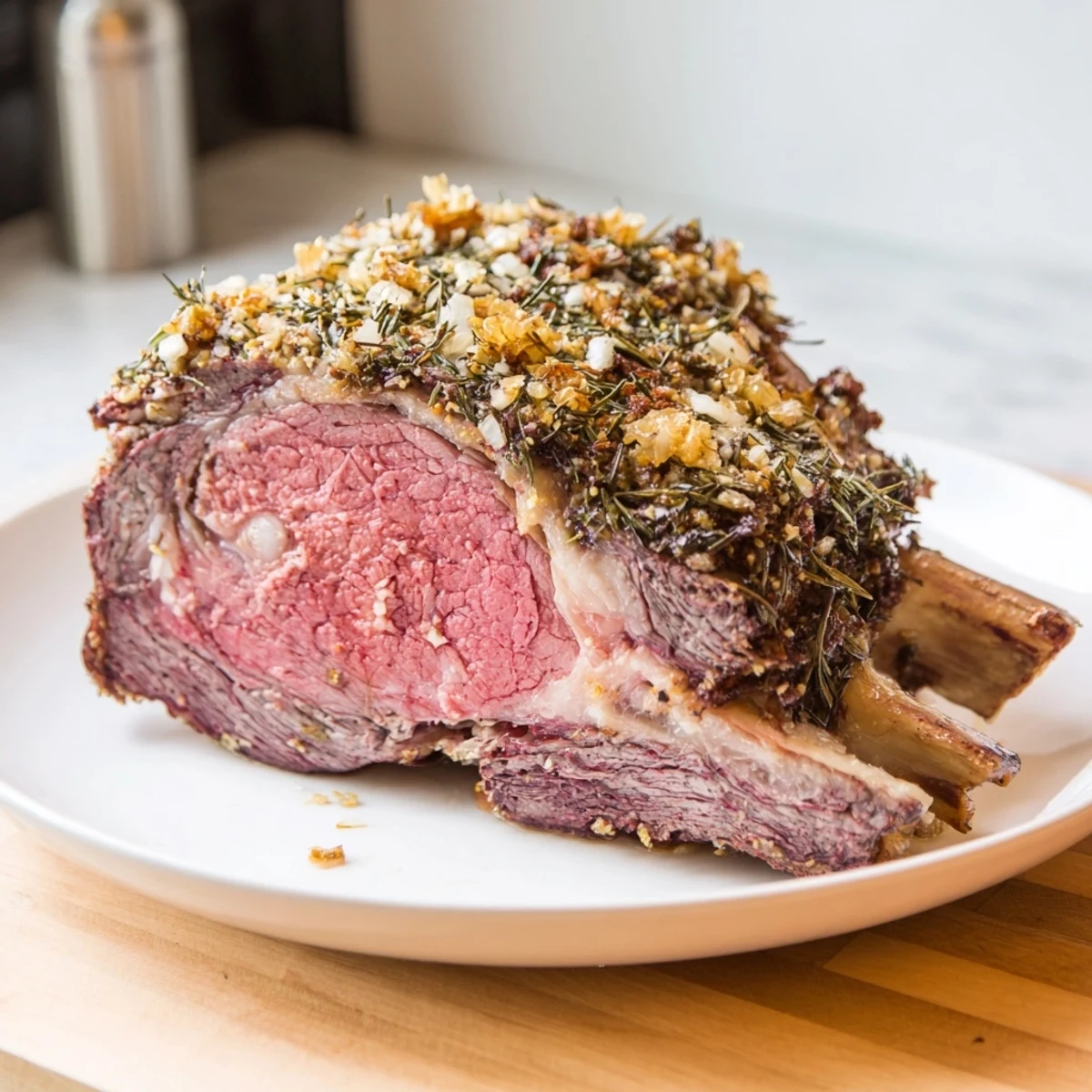
- Remove the roast from the oven. Tent it loosely with foil and let it rest for at least 20 minutes. This isn't waiting; it's essential. The resting period allows the muscle fibers to relax and reabsorb the juices. If you cut immediately, all those delicious juices run onto the cutting board instead of staying in each slice. You'll see the difference in the first bite—moist, tender, perfect.
 Save to Pinterest
 I made this for a small dinner party last spring, and a friend who usually orders takeout because she's intimidated by cooking asked if she could watch. By the end of the night, she wasn't just impressed by the roast—she was convinced she could make one herself. That's when I realized that sharing good food and the confidence to make it is sometimes the greatest gift.
The Magic of the Herb Paste
The herb paste is where this recipe transcends a simple roast beef and becomes something special. When you combine garlic, rosemary, and thyme with oil and mustard, you're not just creating seasoning—you're building layers of flavor. The garlic becomes sweet and mellow. The herbs stay bright. And that Dijon mustard acts invisibly, boosting browning and adding subtle depth without announcing itself. Many people think prime rib needs nothing but salt and pepper, and technically they're right. But this paste turns something delicious into something unforgettable.
Temperature: The Silent Teacher
Understanding meat temperature changed how I cook forever. Prime rib is forgiving, but it rewards precision. Medium-rare at 125°F tastes fundamentally different from medium at 135°F or beyond. Medium-rare is pink, juicy, and melts on your tongue. Push it to 145°F and it becomes more like what you'd get in a steakhouse from a lesser cut. Your meat thermometer isn't just a tool; it's your guarantee that this expensive roast reaches the table exactly as intended. After years of cooking, I still use a thermometer for every roast. It's not overthinking; it's respect for the ingredient.
Serving and Pairing Your Perfect Roast
A prime rib roast this beautiful deserves thoughtful accompaniments. Horseradish cream cuts through the richness with sharp, clean heat. Au jus captures the drippings and gives you a sauce worth soaking into mashed potatoes. A red wine reduction turns the drippings into something elegant. Roasted root vegetables—carrots, parsnips, potatoes—echo the roasting flavors. Creamy mashed potatoes are the classic choice because they provide soft contrast to the roast's crust. You could add a fresh green salad to brighten the plate, or keep it old-fashioned and focused. Whatever you choose, remember that this roast is the star. Let everything else support it.
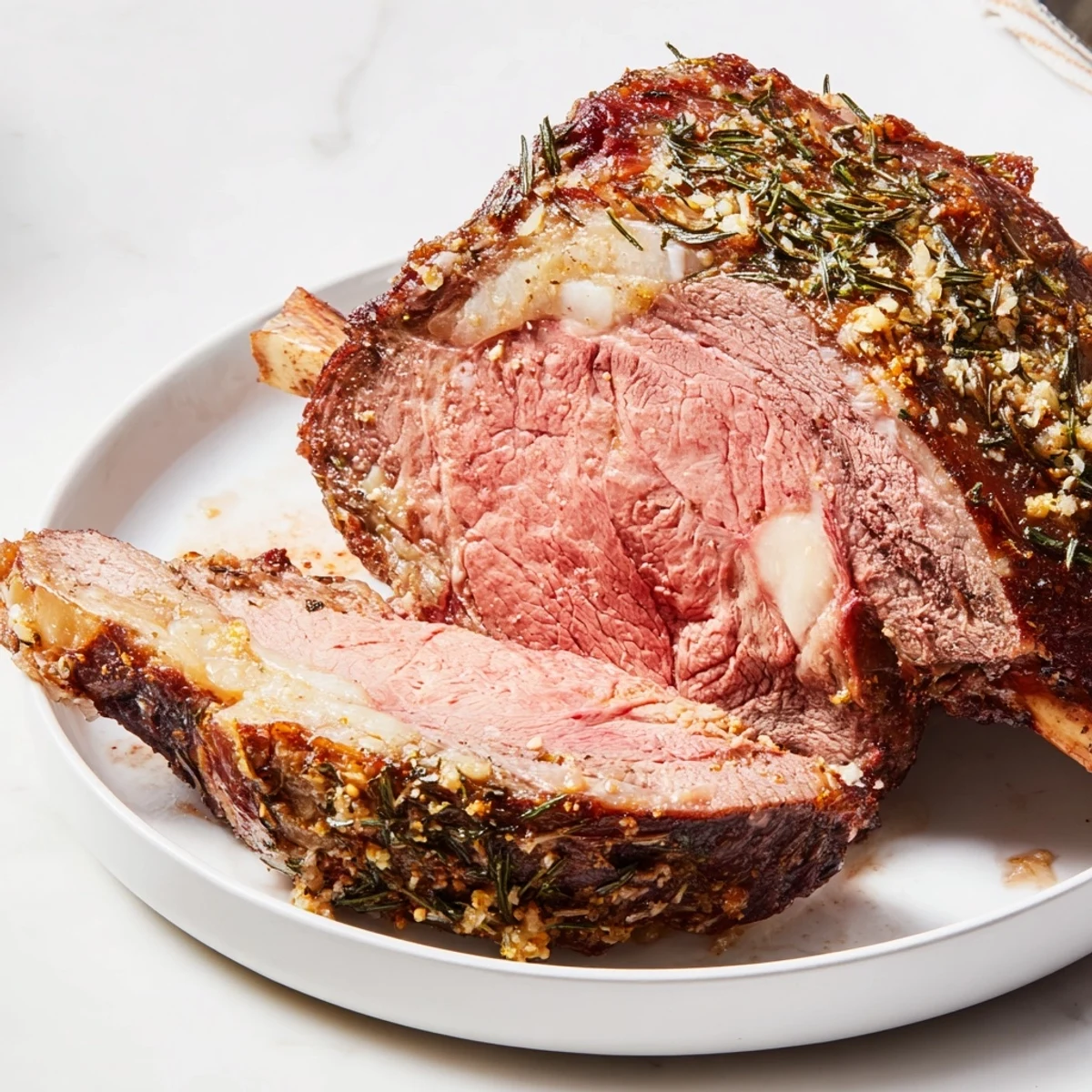
- Slice against the grain for maximum tenderness—look at the muscle fibers and cut perpendicular to their direction.
- Let your guests see the rosy interior when you present it whole before carving—that moment of appreciation matters.
- A sharp carving knife and steady hand make all the difference between beautiful slices and ragged shreds.
 Save to Pinterest
 This roast becomes more than dinner when you understand that you're not just cooking meat—you're creating a moment. Serve it with the confidence of someone who knows exactly what they're doing.
Recipes Q&A
- → What herbs enhance the prime rib flavor?
-
Fresh rosemary and thyme combined with garlic form a fragrant herb paste that infuses the prime rib, enhancing its natural richness.
- → How is the prime rib cooked to medium-rare?
-
The roast is seared at high heat to develop a crust, then roasted at a lower temperature until an internal thermometer reads 125°F (52°C).
- → Why rest the meat after roasting?
-
Resting allows juices to redistribute throughout the cut, resulting in more tender and juicy slices when carved.
- → Can the herb garlic paste be prepared in advance?
-
Yes, making the herb garlic paste a day early lets flavors deepen and you can marinate the roast overnight for stronger infusion.
- → What side dishes pair well with this roast?
-
Roasted vegetables, creamy mashed potatoes, and horseradish cream or jus complement the rich flavors beautifully.
- → Is this dish gluten-free?
-
Yes, the ingredients are naturally gluten-free, but check mustard and seasoning labels to ensure no hidden gluten.