
 Save to Pinterest
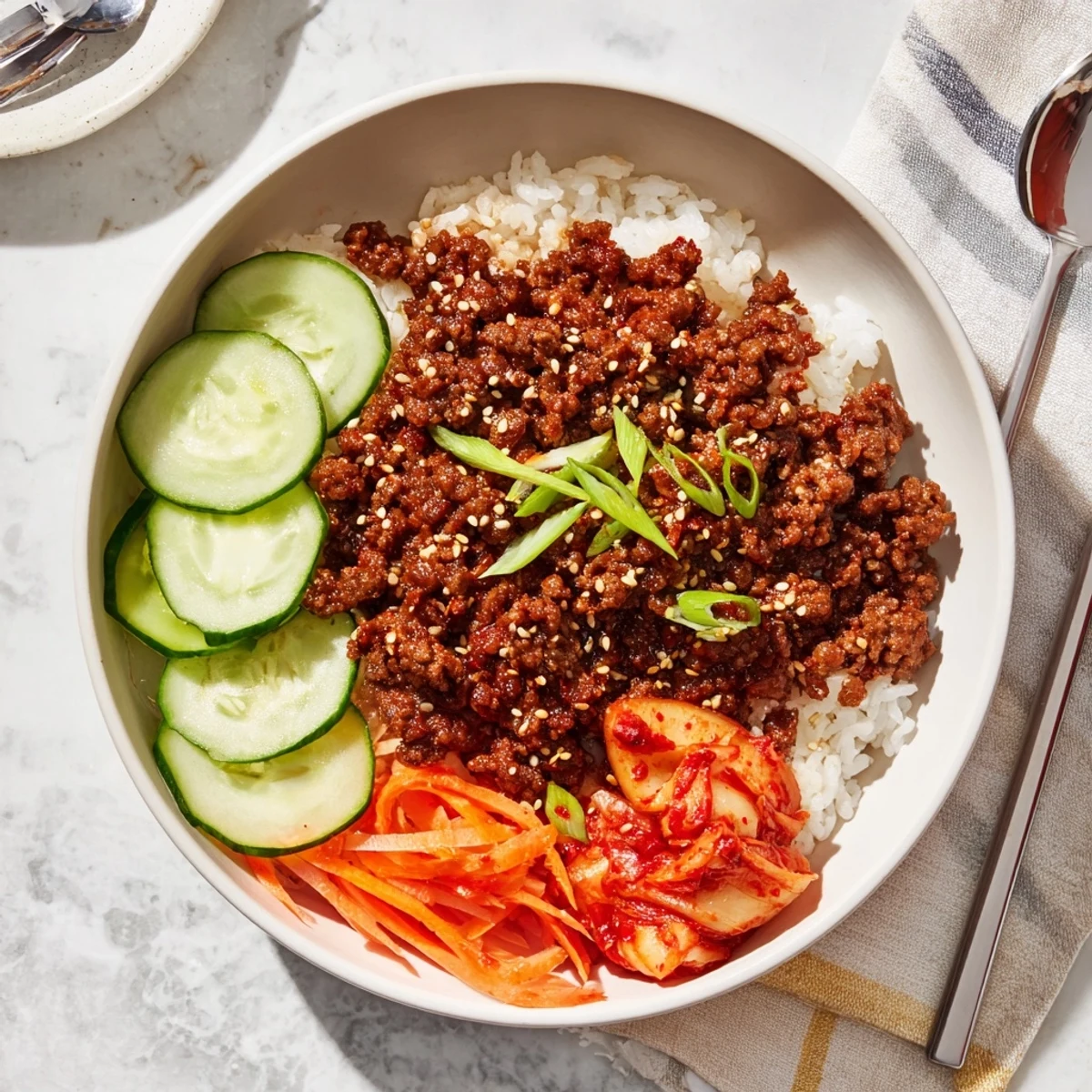
 This Korean ground beef bowl brings together lean browned beef and a bold sweet-spicy sauce made with soy sauce, brown sugar, sesame oil, garlic, ginger, and gochujang. The sauce simmers until thick and glossy, coating every bite of beef.
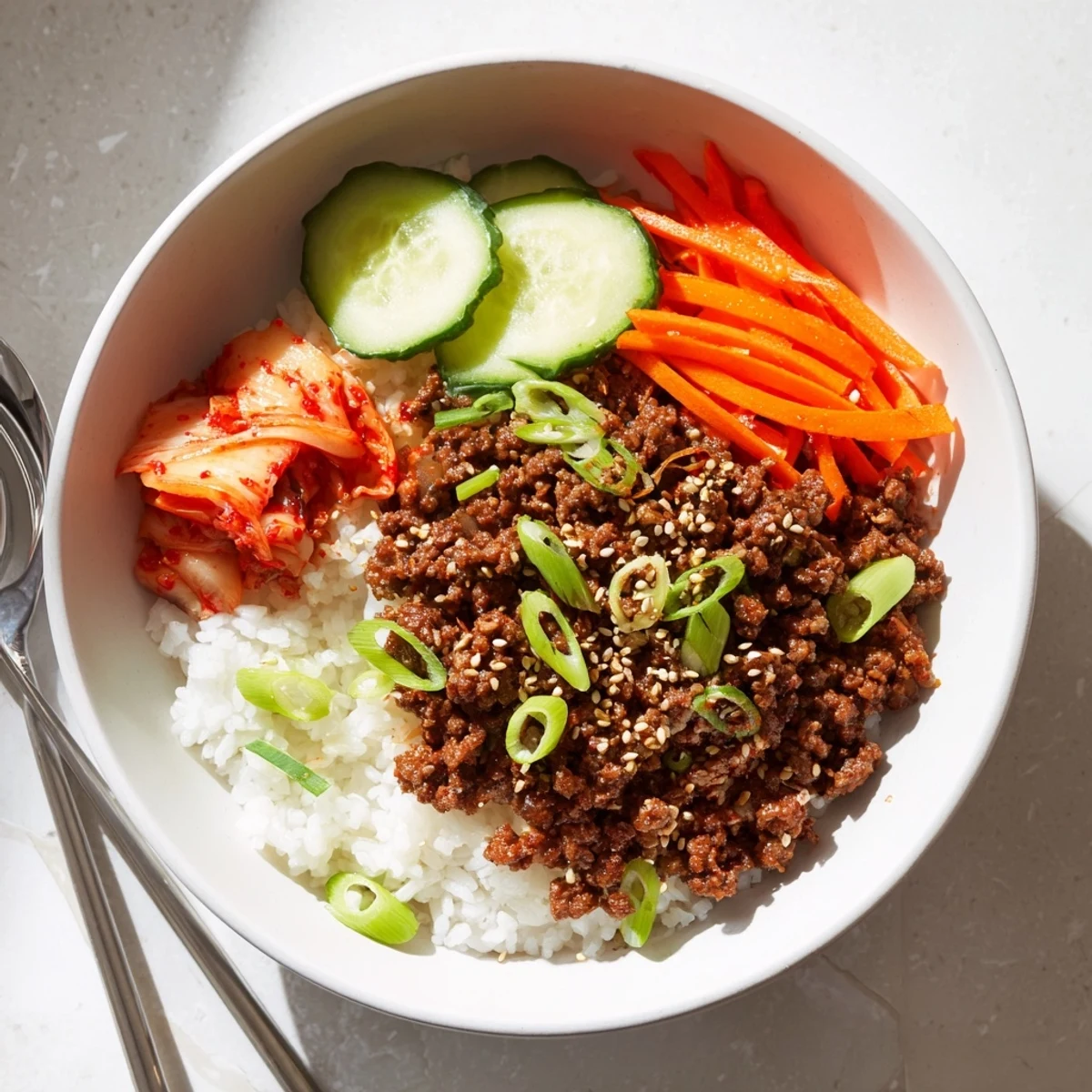
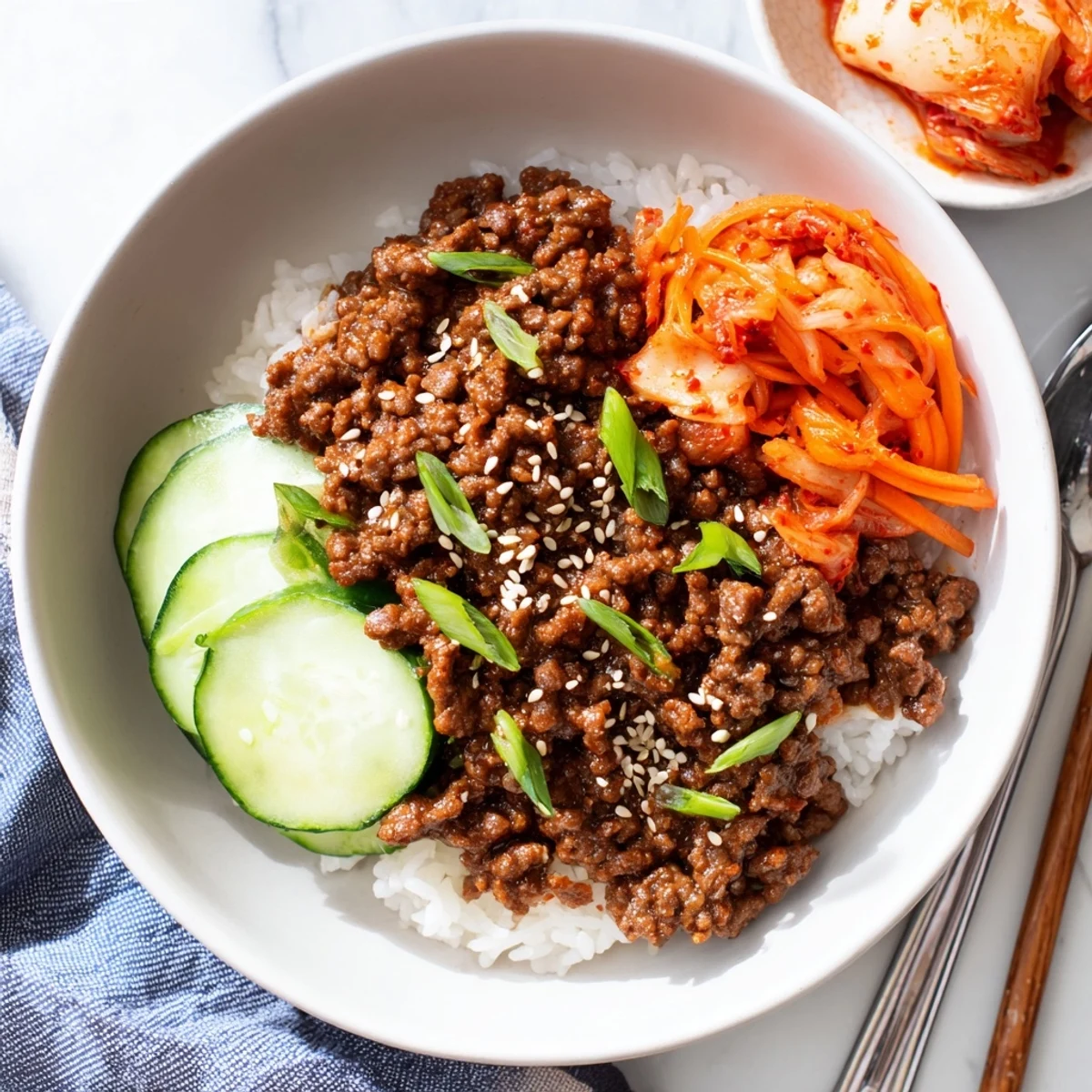
Served over steamed jasmine or short-grain rice and finished with green onions, toasted sesame seeds, julienned carrot, cucumber, and optional kimchi, it delivers a satisfying balance of savory, sweet, and spicy flavors in under 30 minutes.
My kitchen still smelled like sesame oil at midnight when I finally stopped eating and admitted this bowl had ruined me for takeout forever. The sauce had caramelized into something glossy and dark, clinging to every crumble of beef, and I stood there with the skillet in one hand and chopsticks in the other, eating straight from the pan. It was supposed to be meal prep for the week. It lasted two days, tops.
I made this for my neighbor Seo yun once when her fridge was empty and she was working doubles. She laughed and said it was not Korean at all, then asked for seconds, then took the leftover container home.
Ingredients
- Lean ground beef (1 lb): Use 85/15 if you can find it because a little fat carries the sauce beautifully without making it greasy.
- Jasmine or short grain rice (2 cups cooked): Short grain gives you that comforting stickiness but jasmine works if that is what the pantry offers tonight.
- Low sodium soy sauce (1/4 cup): Regular soy sauce will overpower everything else, so low sodium lets the ginger and garlic actually show up.
- Brown sugar (2 tbsp): This is what helps the sauce thicken and caramelize around the beef rather than staying soupy.
- Sesame oil (1 tbsp): Toasted sesame oil specifically, added to the sauce raw, gives a nutty depth that cooking alone cannot replicate.
- Garlic, minced (3 cloves): Fresh garlic only because the jarred stuff gets lost once the sauce hits the hot pan.
- Fresh ginger, grated (1 tbsp): Freeze your ginger beforehand and grate it straight from frozen, it turns into an almost paste that melts right in.
- Crushed red pepper flakes (1/2 to 1 tsp): Start with half a teaspoon, taste the finished sauce, and then decide if you want to feel the heat more.
- Rice vinegar (2 tsp): Just a splash to brighten everything so the sweetness does not become one note.
- Gochujang, optional (1 tbsp): This Korean chili paste adds a fermented, complex warmth that takes the bowl from good to unforgettable.
- Green onions, sliced (2): Slice them thin on a steep diagonal because it looks prettier and somehow tastes better that way.
- Toasted sesame seeds (1 tbsp): Toast them yourself in a dry pan for two minutes and you will never buy pre toasted again.
- Carrot, julienned (1): Cut them as thin as you can manage for a cool crunch against the warm beef.
- Cucumber, thinly sliced (1 small): Leave the skin on for color and a slight bitterness that balances the sweet sauce.
- Kimchi, optional for serving: The funky, sour kick of aged kimchi next to the sweet beef is what turns a bowl into a whole meal.
Instructions
- Build the sauce:
- Whisk together the soy sauce, brown sugar, sesame oil, garlic, ginger, red pepper flakes, rice vinegar, and gochujang in a small bowl until the sugar dissolves. Give it a taste and adjust the heat if you are feeling brave.
- Brown the beef:
- Heat a large skillet over medium high and add the ground beef, breaking it into small pieces with a wooden spoon as it cooks. Let it sit undisturbed for a minute here and there so actual browning happens instead of grey steaming.
- Glaze everything:
- Pour the sauce over the browned beef and stir to coat every crumble. Let it bubble for two to three minutes until the sauce reduces and turns thick, sticky, and impossibly fragrant.
- Build your bowl:
- Divide warm rice among four bowls and pile the saucy beef on top of each one. The rice soaks up whatever sauce escapes, which is exactly what you want.
- Finish with crunch:
- Scatter green onions, sesame seeds, julienned carrot, cucumber slices, and a generous forkful of kimchi over each bowl. Serve immediately while the beef is still glistening and the vegetables are still cold and crisp.
 Save to Pinterest
 I packed this into a thermos for a hiking trip last fall and ate it sitting on a rock overlooking a reservoir, and somehow the cold mountain air made every bite taste twice as good.
Making It Your Own
Ground chicken or turkey works beautifully if you want something lighter, though you will need to add a splash more sesame oil to compensate for the missing fat. For a gluten free version, tamari swaps in seamlessly and nobody at the table will notice the difference. A fried egg on top, with the yolk still runny, turns this into something that feels almost too indulgent for a weeknight.
What to Watch For
The biggest mistake is walking away while the sauce simmers, because sugar burns quietly and then all at once. Stay by the stove, stir occasionally, and pull it off the heat the moment it coats the back of your spoon. The beef will continue to absorb sauce as it sits, so slightly under saucing is actually smarter than drowning it.
Serving and Storing
This reheats wonderfully for lunch the next day if you store the beef and rice separately from the fresh toppings. The sauce actually deepens overnight in the fridge, which makes the leftovers arguably better than the first round.
- Keep cooked rice in a separate container so it does not get gummy.
- Reheat the beef with a splash of water to loosen the sauce back up.
- Always add fresh toppings right before eating for maximum crunch.
 Save to Pinterest
 Some nights you just need dinner to be fast and loud with flavor, and this bowl shows up every single time without asking much of you at all.
Recipes Q&A
- → Can I use a different protein instead of ground beef?
-
Ground chicken or turkey work well as leaner alternatives. For a plant-based version, crumbled tofu or tempeh can absorb the sauce beautifully while keeping the dish hearty and satisfying.
- → How spicy is this dish?
-
The heat level is fully adjustable. Use half a teaspoon of red pepper flakes for mild warmth or go up to a full teaspoon for more kick. Adding gochujang deepens the spice with a fermented, complex chili flavor.
- → What type of rice works best?
-
Short-grain white rice or jasmine rice are ideal choices. Short-grain rice offers a sticky, chewy texture that pairs perfectly with the saucy beef, while jasmine rice provides a fluffier, fragrant base.
- → Can I make this ahead of time?
-
The cooked beef and sauce mixture stores well in the refrigerator for up to three days. Reheat gently in a skillet and prepare fresh rice and toppings when ready to serve for the best texture and flavor.
- → Is this dish gluten-free?
-
It can easily be made gluten-free by swapping regular soy sauce for tamari. Double-check that your gochujang brand is also gluten-free, as some varieties contain wheat-based additives.
- → What toppings pair well with this bowl?
-
Green onions, toasted sesame seeds, julienned carrot, and thin cucumber slices add crunch and freshness. Kimchi brings tangy fermentation, and a fried egg on top adds richness and an extra layer of flavor.