
 Save to Pinterest
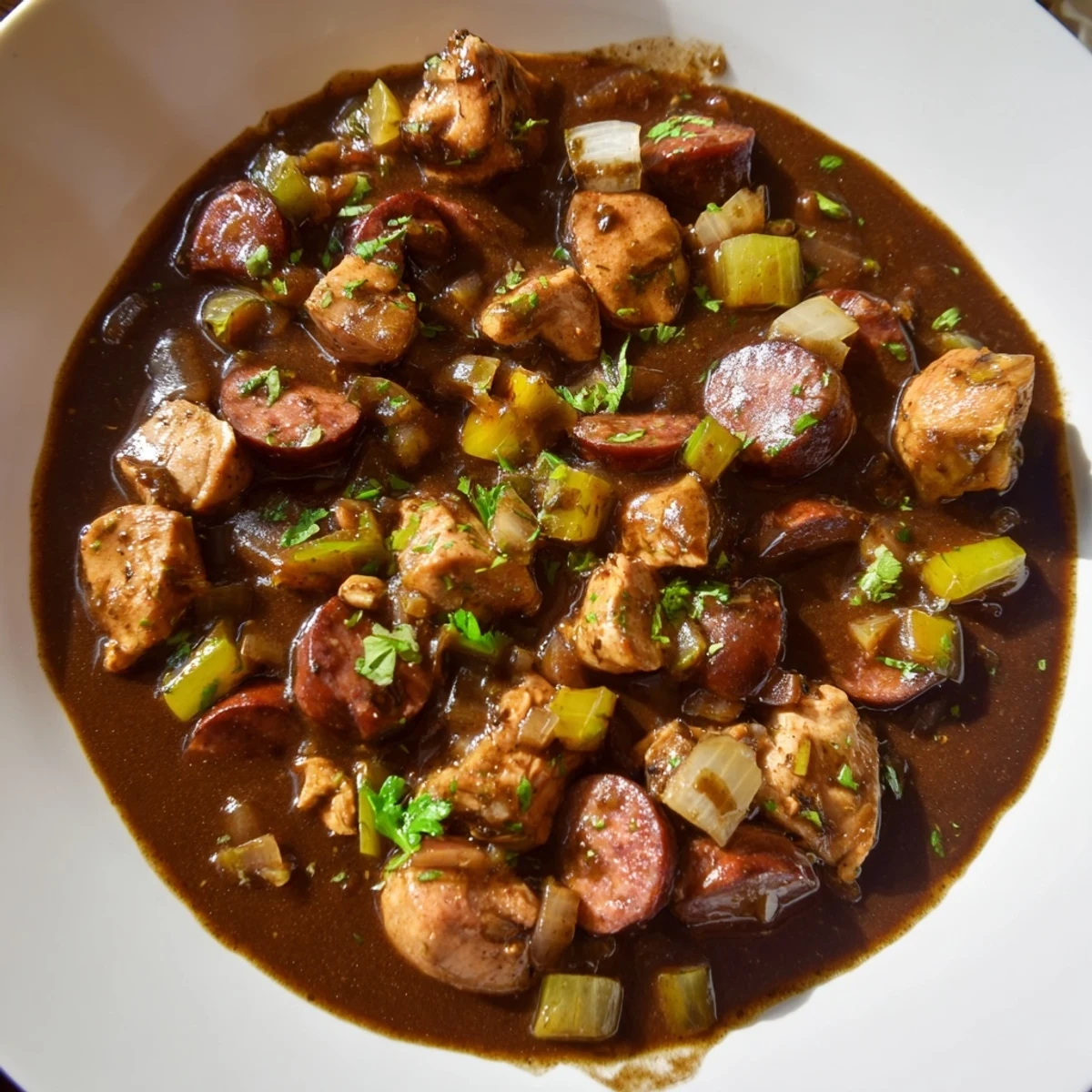
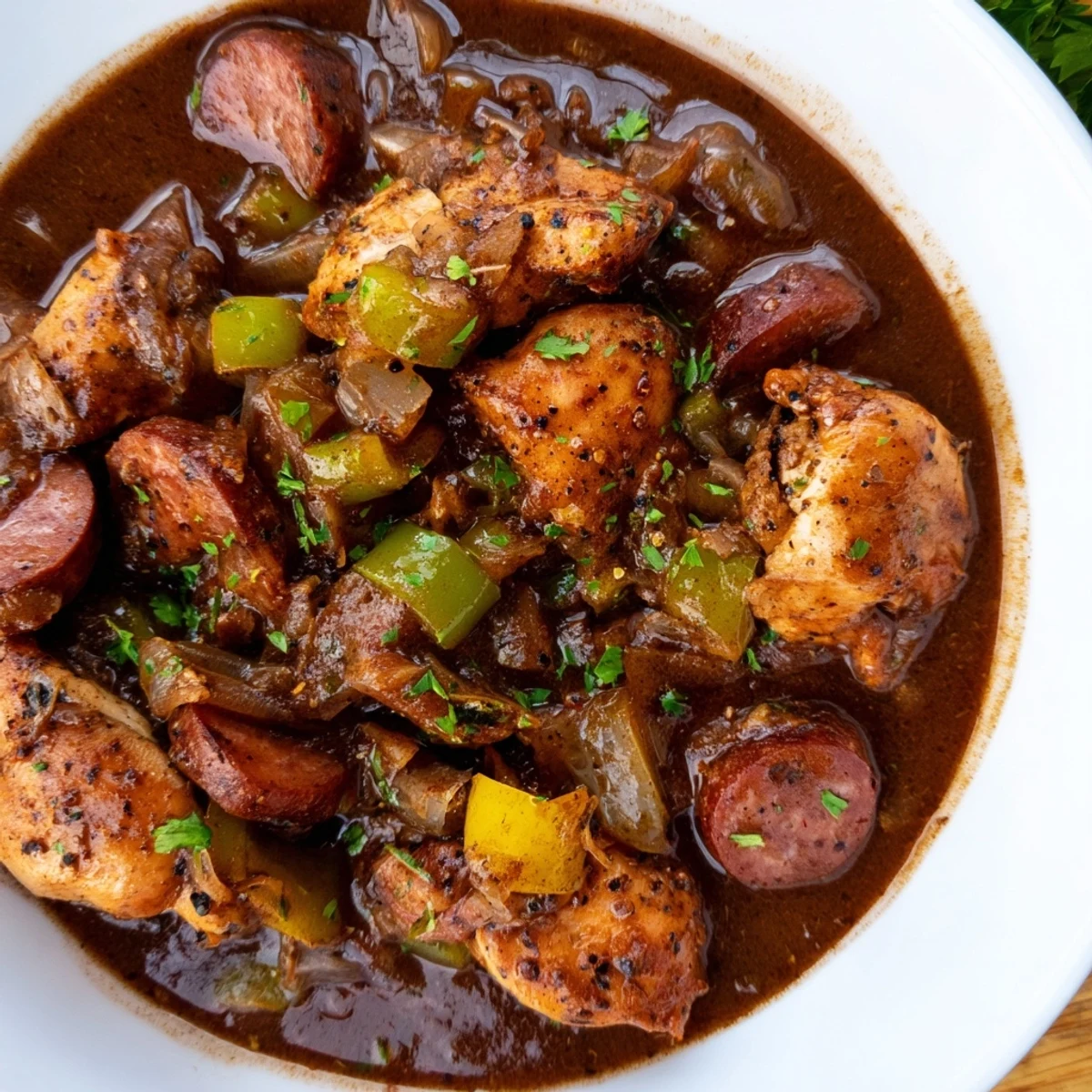
 This classic Louisiana dish combines tender chicken thighs and smoky andouille sausage with a deeply flavored roux base. Aromatic vegetables like onion, bell pepper, and celery add traditional Creole depth, while spices including paprika, thyme, and bay leaves provide warmth and complexity. Slowly simmered in chicken stock, this hearty stew is best served over fluffy white rice and garnished with fresh scallions and parsley for brightness. It’s a festive, satisfying dish ideal for sharing during Mardi Gras or cozy family dinners.
The first time I attempted a proper roux, I stood over that pot for twenty straight minutes, my arm aching as I stirred what looked like nothing more than oily paste. My neighbor Miss Ruby had warned me that patience makes the gumbo, and she wasn't kidding about the color transformation. That afternoon, watching the mixture turn from pale yellow to peanut butter brown to that deep chocolate shade, I finally understood why Louisianians treat roux-making like a sacred meditation.
Last Fat Tuesday, I made three pots of this gumbo for friends who'd never experienced authentic Creole cooking. Watching their eyes light up at that first spoonful, the rich aroma filling every corner of my apartment, reminded me that some recipes aren't just about feeding people but about creating moments they'll talk about for years.
Ingredients
- Boneless chicken thighs: Dark meat stays tender through long simmering and absorbs all those spices beautifully
- Andouille sausage: This smoked Cajun sausage is non-negotiable for authentic flavor and substitute with kielbasa only in emergencies
- The holy trinity: Onion, bell pepper, and celery form the aromatic foundation that distinguishes Cajun from other cuisines
- Vegetable oil and flour: Simple ingredients that transform into magic when treated with patience and respect
- Low-sodium chicken stock: Control your salt level since the sausage and seasonings bring plenty of their own
- Smoked paprika and cayenne: This combination gives that characteristic warmth without overwhelming heat
- Filé powder: Ground sassafras leaves thicken the gumbo and add an earthy flavor you can't get anywhere else
Instructions
- Master the roux:
- Heat your oil over medium heat and gradually whisk in the flour, then stir without stopping for 15 to 20 minutes until the roux reaches deep chocolate brown. This is the moment you can't walk away from, where your patience directly translates to flavor depth.
- Build the foundation:
- Add the onion, bell pepper, and celery to your roux and sauté for 5 minutes until softened. The vegetables will sizzle and release their aromas into that dark, nutty base.
- Awaken the garlic:
- Stir in the minced garlic and cook for just 1 minute until fragrant. Garlic burns quickly, so keep it moving and watch for that sudden burst of aroma.
- Brown the sausage:
- Add the sliced andouille and cook for 3 to 4 minutes, letting the edges brown slightly. The sausage releases its smoky oils into the roux, which is exactly what you want.
- Season the chicken:
- Add the chicken pieces along with salt, black pepper, paprika, cayenne, thyme, and bay leaves. Stir thoroughly to coat everything in those spices.
- Create the simmer:
- Slowly pour in the chicken stock while stirring constantly to prevent lumps. Bring to a boil, then reduce heat to low and simmer uncovered for 45 to 60 minutes, stirring occasionally to prevent sticking.
- Finish with finesse:
- Taste and adjust seasoning before stirring in filé powder just before serving. Discard those tired bay leaves.
- Serve it up:
- Ladle generous portions over hot white rice and scatter scallions and parsley across the top like confetti.
 Save to Pinterest
 This recipe became my go-to for bringing people together after a particularly difficult winter when everyone needed something warm and restorative. There's something about stirring a pot of gumbo that feels like an act of love, especially when you see people going back for seconds and thirds.
Making It Your Own
After making this gumbo countless times, I've learned that substitutions are possible but never quite the same. Adding smoked turkey or tasso ham creates incredible depth, while shrimp tossed in during the last ten minutes transforms it into a seafood version that still honors the original spirit.
Serving Suggestions
Hot sauce should always be available on the table for those who want to dial up the heat. A loaf of crusty French bread for sopping up every last drop isn't just recommended but practically required.
Storage and Reheating
Gumbo actually tastes better the next day, which is why experienced cooks always make extra. Store it in the refrigerator for up to three days or freeze portions for those nights when you need Louisiana comfort without the work.
- Reheat gently over low heat, adding a splash of water or stock if it has thickened too much
- The roux may separate slightly when frozen but will come together beautifully as it reheats
- Never boil leftover gumbo or you'll risk separating the roux permanently
 Save to Pinterest
 Whether it's Mardi Gras or just a Tuesday that needs some magic, this gumbo delivers comfort that feels like a warm embrace from an old friend.
Recipes Q&A
- → What is the purpose of the roux in this dish?
-
The roux acts as a thickening agent and adds a rich, nutty flavor to the stew, providing a deep, complex base essential in Creole cooking.
- → Can I adjust the spiciness of the stew?
-
Yes, you can modify the cayenne pepper and smoked paprika amounts to suit your heat preference, making the dish milder or spicier.
- → Is andouille sausage necessary?
-
Andouille sausage gives a smoky, spicy character typical of this dish, but you can substitute with other smoked or spicy sausages if preferred.
- → When should filé powder be added?
-
Filé powder is stirred in just before serving to thicken the stew and impart a unique, earthy flavor traditional to gumbo.
- → What is the ideal cooking vessel for this stew?
-
A large heavy-bottomed pot or Dutch oven is best for evenly cooking the roux and simmering the ingredients thoroughly.