
 Save to Pinterest
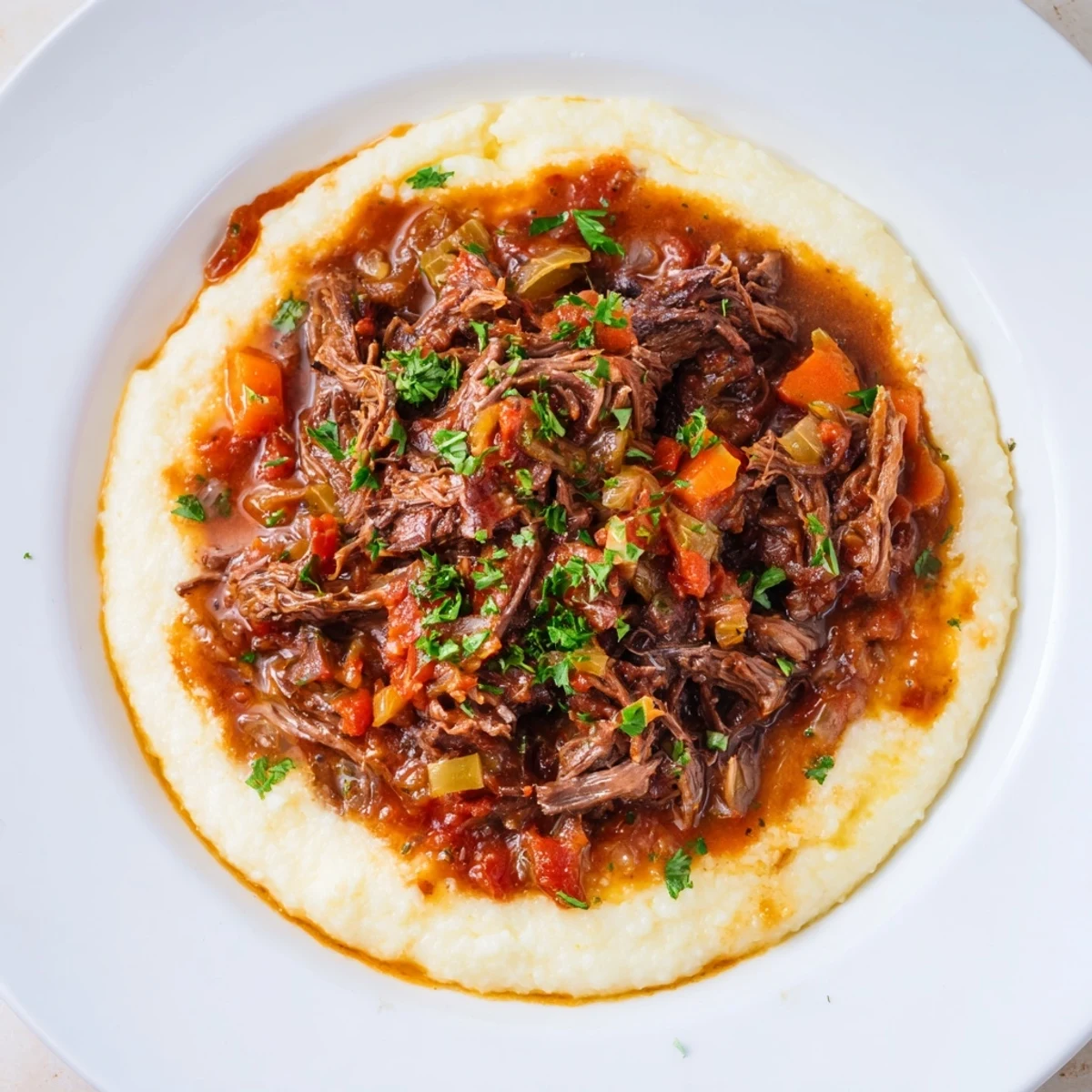
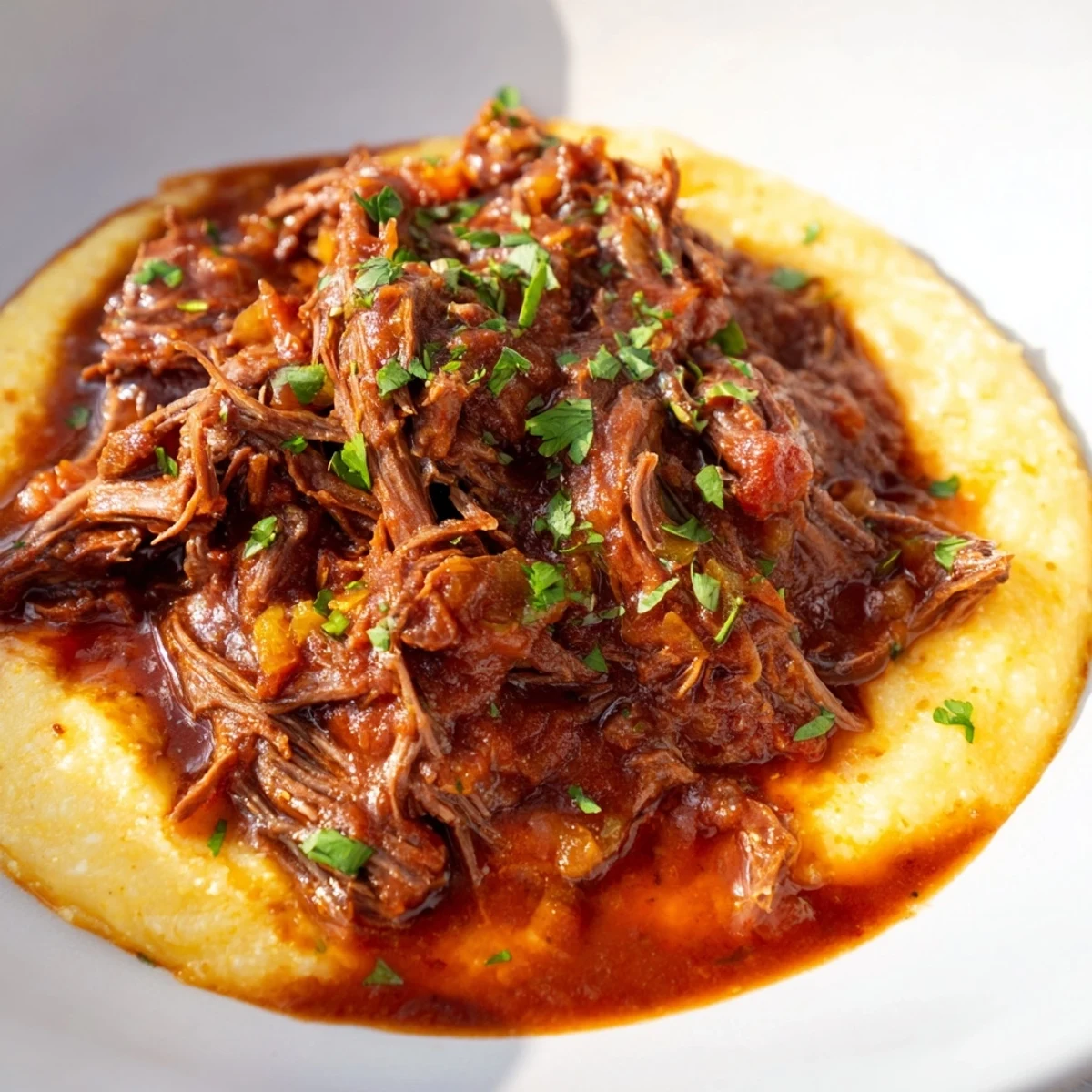
 This hearty Italian classic transforms beef chuck roast into fork-tender shreds after hours of slow cooking in a savory tomato and vegetable sauce. The result is a rich, comforting ragu that pairs perfectly with velvety, cheesy polenta. Ideal for feeding a crowd or enjoying leftovers throughout the week, this dish balances deep, savory flavors with the smooth texture of cornmeal. Simply sear the meat, simmer with aromatics, and let your slow cooker do the work for a satisfying meal.
There's something about the smell of beef turning golden in a hot skillet that makes you feel like you're doing something right in the kitchen. I discovered this ragu on a cold October evening when I was determined to prove that slow cooking wasn't just a weeknight shortcut but an actual way to build flavor that no quick recipe could touch. Eight hours seemed like forever, but the house smelled like Italy, and by dinner time, my guests were already seated before I'd even finished the polenta.
I made this for my sister's birthday dinner last winter, and she asked for seconds before finishing her first bowl. That's when I realized it wasn't just the flavors—it was the way serving it felt like giving someone a warm embrace on a plate. She still texts me asking when I'm making it again.
Ingredients
- Beef chuck roast (2 lbs): This cut has enough fat and collagen to turn into silk after hours in the slow cooker, so don't reach for lean meat here.
- Olive oil (2 tbsp): Use a decent one for searing; it makes the browning stage taste less like a chore.
- Yellow onion, carrot, celery: These are your holy trinity—the foundation that nobody really notices but everyone tastes.
- Garlic (3 cloves): Mince it fine so it melts completely into the sauce instead of sitting there in chunks.
- Tomato paste (1 tbsp): This concentrated moment of umami is what makes people ask what your secret ingredient is.
- Dry red wine (1 cup): Use something you'd actually drink; cheap wine just adds bitterness.
- Crushed tomatoes (28 oz): San Marzano if your budget allows, but any good brand works as long as the tomatoes aren't from concentrate.
- Beef broth (1 cup): Homemade is incredible, but quality store-bought won't let you down.
- Dried oregano and basil (1 tsp each): Fresh herbs wilt away, so dried actually makes sense here.
- Polenta cornmeal (1 cup): Coarse cornmeal is essential; fine cornmeal turns into library paste.
- Whole milk, butter, Parmesan (1 cup, 3 tbsp, 1 cup): These three things together create that velvety texture that makes people close their eyes when they eat.
Instructions
- Sear the beef until it's mahogany brown:
- Don't rush this part—brown beef tastes fundamentally different from pale beef. Work in batches so you're not crowding the pan and steaming everything. You'll see this caramelization and think it's worth the extra few minutes.
- Build your flavor base with soffritto:
- Onion, garlic, carrot, and celery get soft and golden in that same skillet. Stir in tomato paste and let it sit for a minute to deepen and darken slightly—this matters more than you'd think.
- Deglaze with wine:
- Pour red wine into the hot pan and use a wooden spoon to scrape up all those golden crusty bits. That's flavor you made, and you're not leaving it behind. Pour everything—vegetables, wine, and all—over the beef.
- Add liquids and seasonings, then slow cook:
- Crushed tomatoes, beef broth, herbs, and salt go in now. Eight hours on low is the right move; four hours on high works if you're in a hurry, but low is more forgiving. The meat will be fork-tender and the sauce will taste like it took all day because it did.
- Finish and adjust:
- Pull out the bay leaf, shred the beef with two forks right there in the pot, and taste. If it needs more salt, add it now. If it tastes a little thin, let it sit uncovered for the last hour to concentrate.
- Make polenta while everything else rests:
- Bring salted water to a boil and whisk in cornmeal slowly so you don't get lumps. Stir every few minutes—it'll bubble and splatter a bit, so keep a wooden spoon in hand. After 20–25 minutes it should be thick and creamy.
- Stir in milk, butter, and Parmesan:
- This is where the polenta stops being food and becomes pure comfort. The texture should be like soft mashed potatoes, not stiff. Taste and adjust salt if needed.
- Serve with generosity:
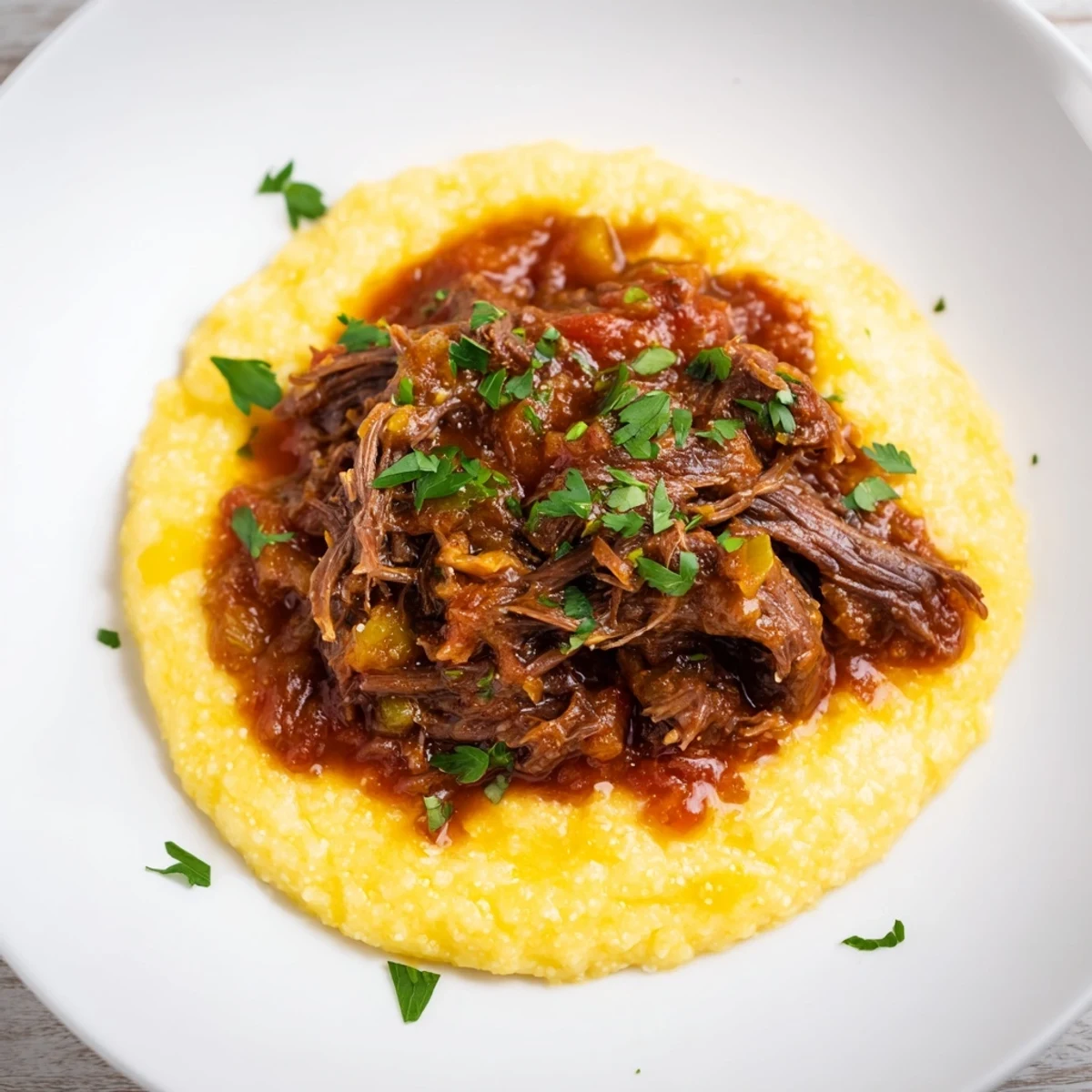
- Spoon creamy polenta into bowls, pile beef ragu on top, and finish with fresh parsley and a little extra Parmesan. Serve immediately while everything's still warm.
 Save to Pinterest
 One night, a friend told me this was the first dinner she'd made for her new partner, and it had impressed him enough that he asked her to marry him five years later. Food can be that, sometimes—a quiet beginning to something bigger.
Why This Dish Works
Slow cooking isn't about laziness; it's about letting time do what heat and speed can't. The low, steady warmth breaks down the tough collagen in chuck roast until it becomes so tender it practically vanishes. The tomato sauce doesn't reduce quickly—it deepens instead, layer by layer, as the meat releases gelatin and the herbs infuse everything. By the time eight hours have passed, you've got something that tastes like it simmered on a Roman stove for generations.
Making Polenta Worth Eating
Most people think polenta is boring because they've only had the lumpy, gluey versions made without care. The secret is ratio, heat control, and stirring—not constantly, but consistently. When you add milk, butter, and Parmesan at the end, you're not just flavoring cornmeal; you're transforming it into something silky that tastes more luxurious than cream. It should move like lava when you spoon it, not plop like clay.
Timing and Make-Ahead Wisdom
The ragu actually tastes better the next day because all the flavors have had time to marry and settle. You can make it two days ahead and reheat it gently on the stovetop, or freeze it for up to three months in airtight containers. Polenta is best made fresh, but if you need to get ahead, you can make it an hour or two before, spread it on a sheet pan to cool, and reheat it gently with a splash of milk before serving.
- A Parmesan rind stirred into the ragu during cooking adds subtle umami depth—remove it before shredding the beef.
- If you have red wine left over after deglazing, drink it while you cook; this is one of the rules.
- Don't be afraid to add a pinch of red pepper flakes if you want a whisper of heat cutting through the richness.
 Save to Pinterest
 This is the kind of recipe that teaches you something about patience and trust in cooking. Make it once, and you'll understand why Italian grandmothers had time to make conversation while dinner handled itself.
Recipes Q&A
- → What cut of beef is best?
-
Chuck roast is ideal for slow cooking as it becomes tender and shreds easily after several hours.
- → Can I make this on the stovetop?
-
Yes, you can braise the beef in a Dutch oven over low heat for about 3-4 hours until tender.
- → Is the dish spicy?
-
It has a slight kick from optional red pepper flakes, but you can leave them out for a milder flavor.
- → Can I freeze the leftovers?
-
The ragu freezes very well for up to 3 months. Just thaw in the fridge before reheating.
- → What sides pair well with this?
-
Crusty bread, roasted vegetables, or a simple green salad complement the rich flavors nicely.