
 Save to Pinterest
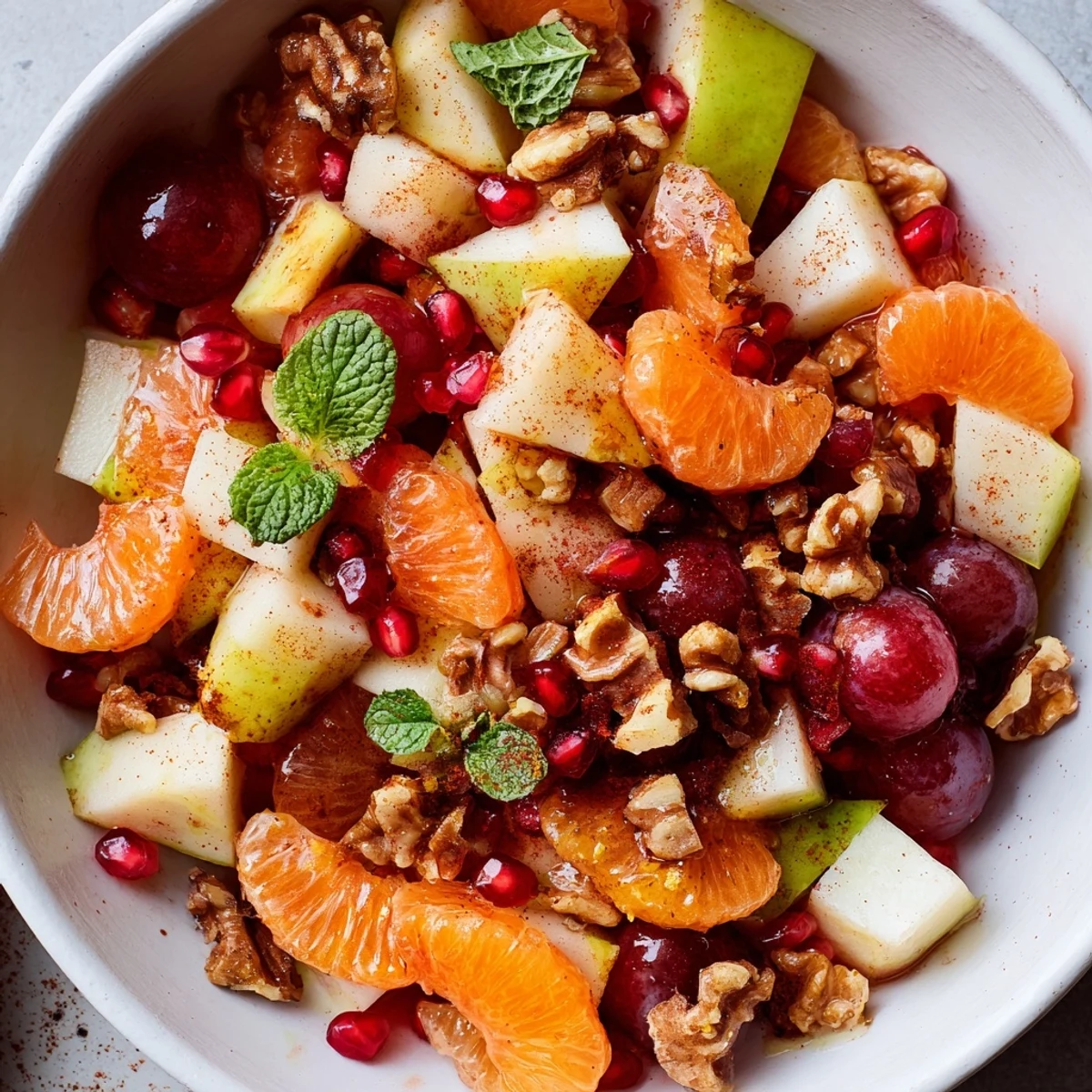
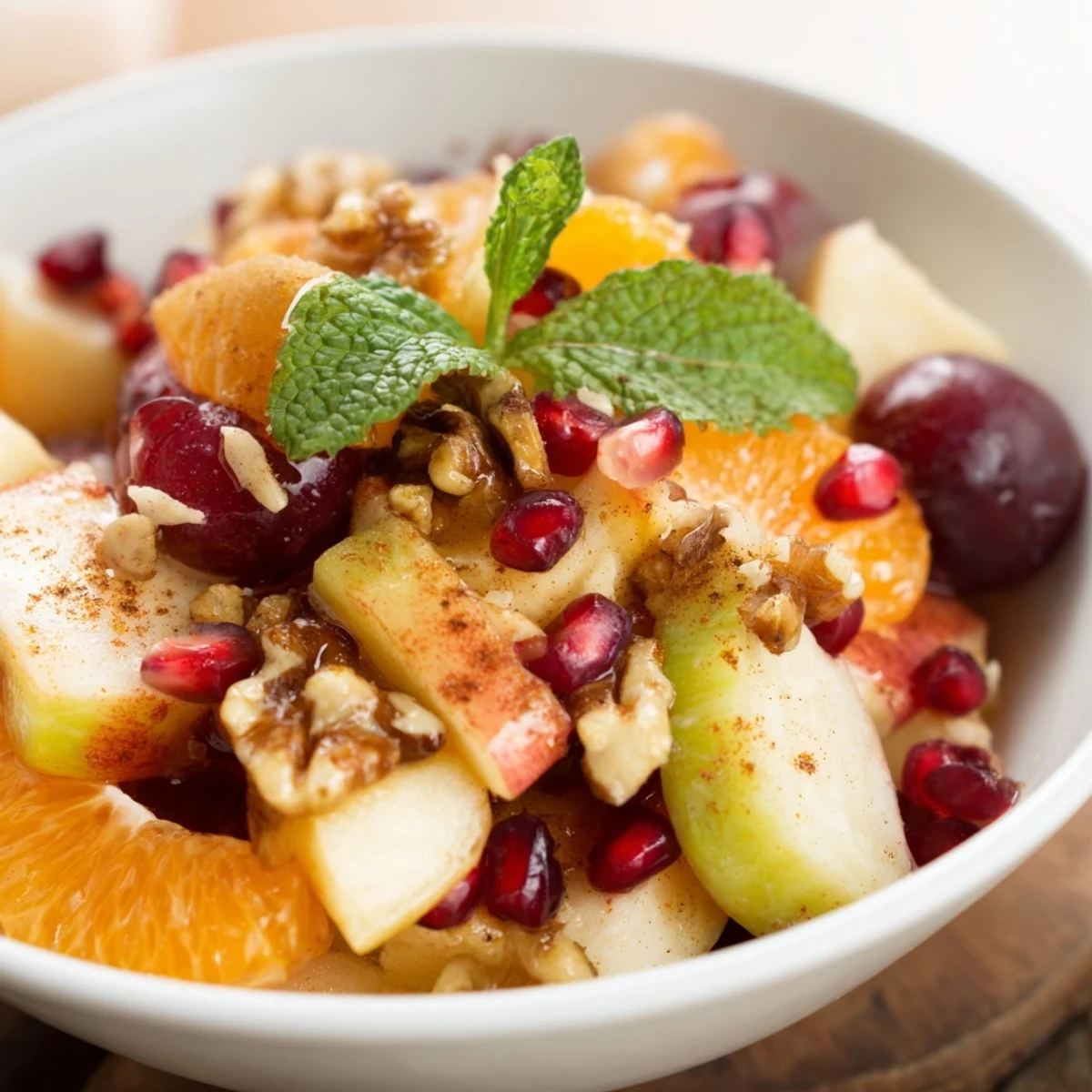
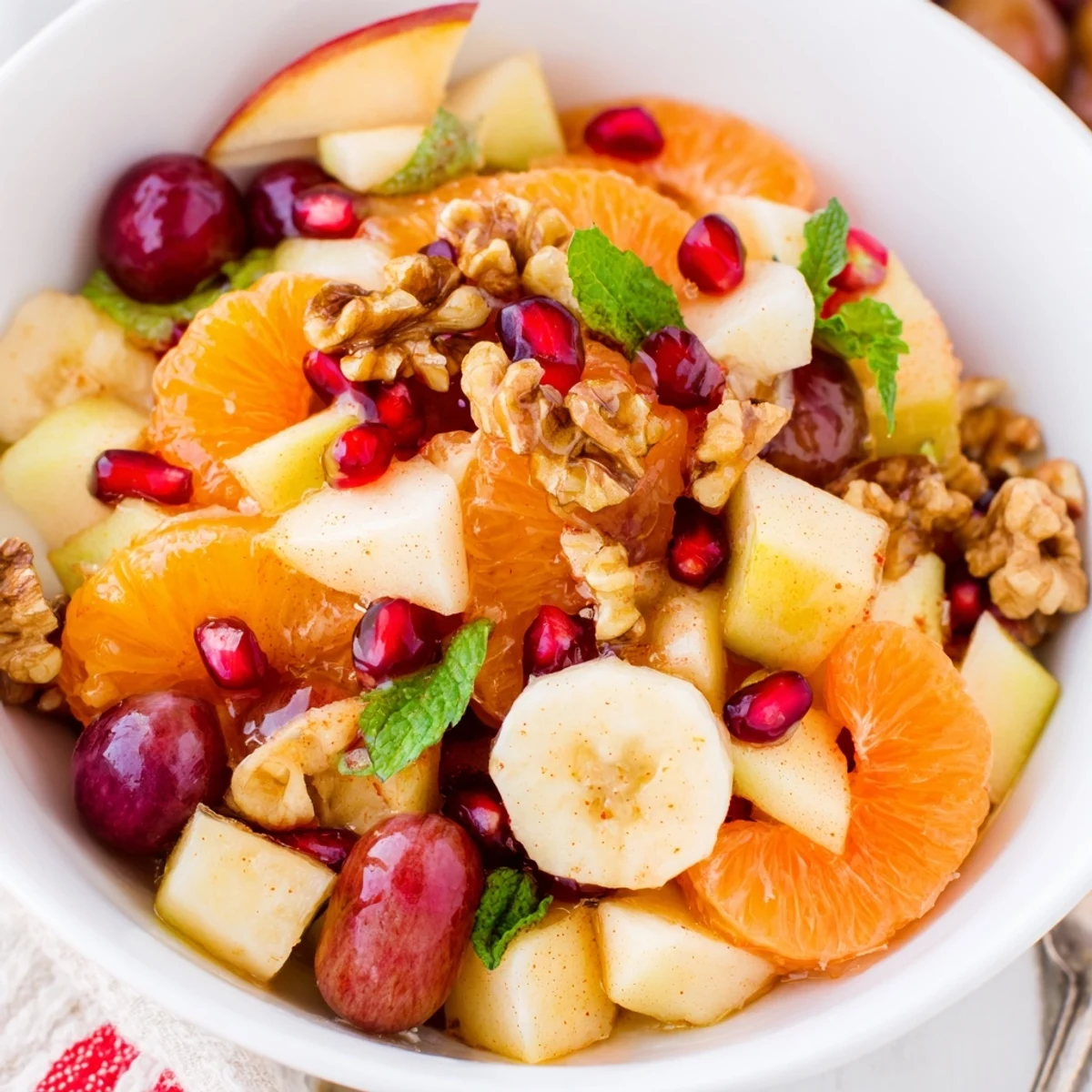
 This winter fruit salad combines juicy oranges, grapefruit, apples, ripe pear, pomegranate seeds, and optional banana and grapes for a colorful mix. A tangy dressing of fresh lemon juice, honey or maple syrup, cinnamon, and orange zest brings a bright, sweet flavor. Garnished with chopped mint leaves and toasted nuts, it offers crisp textures and a fresh finish. Perfect served chilled to brighten cold days with natural sweetness and vibrant citrus notes.
My sister called me on a gray January afternoon, complaining that everything in her kitchen looked the same color as the weather outside. I laughed and told her to meet me at the farmer's market, where I'd learned a trick about winter fruit that changed how I cook when it's cold. Within an hour, we were back at her place with a pile of jewel-toned citrus and pomegranate, building something so bright it felt like rebellion against the season.
I made this for a potluck where someone had already brought three casseroles, and honestly, I was nervous a fruit salad would disappear untouched. Instead, people came back for seconds asking if I'd add something special to the dressing, and I realized that simplicity sometimes reads as confidence.
Ingredients
- Oranges and grapefruit: These are winter's gift, and their juice becomes part of the magic when you segment them fresh instead of buying pre-cut.
- Apples: A crisp variety like Honeycrisp or Granny Smith keeps the texture interesting and their slight tartness balances the citrus.
- Pear: It softens the salad's bite and adds a delicate sweetness that makes people pause mid-bite.
- Pomegranate seeds: These aren't just pretty; they bring a subtle tartness and snap that hold their own against the dressing.
- Grapes: Red grapes add continuity and a wine-like note when halved, allowing the dressing to coat them better.
- Banana (optional): A fresh slice keeps things creamy without heaviness, though it's best added just before serving so it doesn't brown.
- Lemon juice: The acid that keeps everything tasting bright and prevents browning in ways that feel invisible but matter.
- Honey or maple syrup: Just enough sweetness to marry the flavors without making this feel like dessert.
- Cinnamon: A whisper of warmth that tastes like December and transforms an ordinary salad into something that feels intentional.
- Orange zest: Grate this fresh, and it releases oils that give the dressing a sophisticated depth.
- Fresh mint: The final note of brightness that makes everything taste alive.
- Toasted nuts: Walnuts or pecans add texture and a slight bitterness that grounds the sweetness.
Instructions
- Prep your fruit like you mean it:
- Peel your citrus over a bowl to catch any juice, then segment each piece so the membrane falls away. The fruit will release oils that matter, so don't rush this part.
- Combine the stars:
- Pile everything into a large bowl—the oranges, grapefruit, apples, pear, pomegranate seeds, and grapes. If you're using banana, hold it back for now.
- Make the dressing together:
- In a small bowl, whisk the lemon juice with honey, cinnamon, and orange zest until it tastes balanced and smells warm. Taste it and adjust the sweetness if needed.
- Bring it all together gently:
- Pour the dressing over the fruit and toss with care, the way you'd fold something delicate. You want every piece kissed by the dressing, not bruised.
- Finish and serve:
- Add banana now if you're using it, scatter the mint and nuts across the top, and either serve immediately or chill for up to two hours. Cold tastes better, but fresh is unmatchable.
 Save to Pinterest
 The first time I served this, my nephew asked if I'd put magic in the dressing, and my heart just melted. That's when I knew a salad could be more than nutrition—it could be a small, bright thing that people remember.
The Winter Citrus Advantage
Winter fruit tastes different than summer fruit, and I spent years not understanding why until a farmer explained that cold actually concentrates sweetness. Oranges, grapefruits, and pears hit their peak in these months, which means this salad tastes better in January than it would in June. Once you taste the difference, you'll start planning your winter meals around what's actually ripe.
Texture Is Everything
The first time I made this, I cut everything into uniform pieces because that seemed like the professional thing to do. The salad was pretty but forgettable. The second time, I varied the sizes—some pomegranate seeds whole, apples in larger dice, citrus in loose segments—and suddenly every bite felt different. It's the same lesson I keep learning: perfection bores us, but variation delights.
Making It Your Own
This salad is forgiving and hungry for your own touches. I've added kiwi when I found beautiful ones at the market, swapped maple syrup for honey when someone mentioned a vegan preference, and once stirred in pomegranate molasses because I was feeling adventurous. Each version taught me something new about balance and intuition in cooking.
- Swap the nuts for toasted seeds if tree nuts are a concern, and the richness remains.
- If you make this ahead, keep the dressing separate and dress the salad just before serving to preserve the crispness.
- A splash of pomegranate juice in the dressing adds subtle depth and turns the whole bowl a deeper ruby color.
 Save to Pinterest
 Winter doesn't have to taste gray. This salad is proof that the simplest ingredients, treated with intention and a little warmth, can turn an ordinary day into something that feels like celebration.
Recipes Q&A
- → What fruits are included in this salad?
-
Oranges, grapefruit, apples, ripe pear, pomegranate seeds, with optional banana and red grapes add balanced sweetness and texture.
- → How is the dressing prepared?
-
The dressing is whisked from fresh lemon juice, honey or maple syrup, ground cinnamon, and orange zest for a citrusy, sweet-spiced flavor.
- → Can nuts be substituted in the garnish?
-
Yes, toasted walnuts or pecans are suggested, but pumpkin seeds can be used as a nut-free alternative.
- → Is the salad best served immediately or chilled?
-
It can be served immediately or refrigerated for up to two hours to enhance freshness and flavor melding.
- → Are there any tips to add more color or flavor?
-
Adding kiwi, persimmon, or blood orange segments can boost vibrancy and add different flavor notes.