
 Save to Pinterest
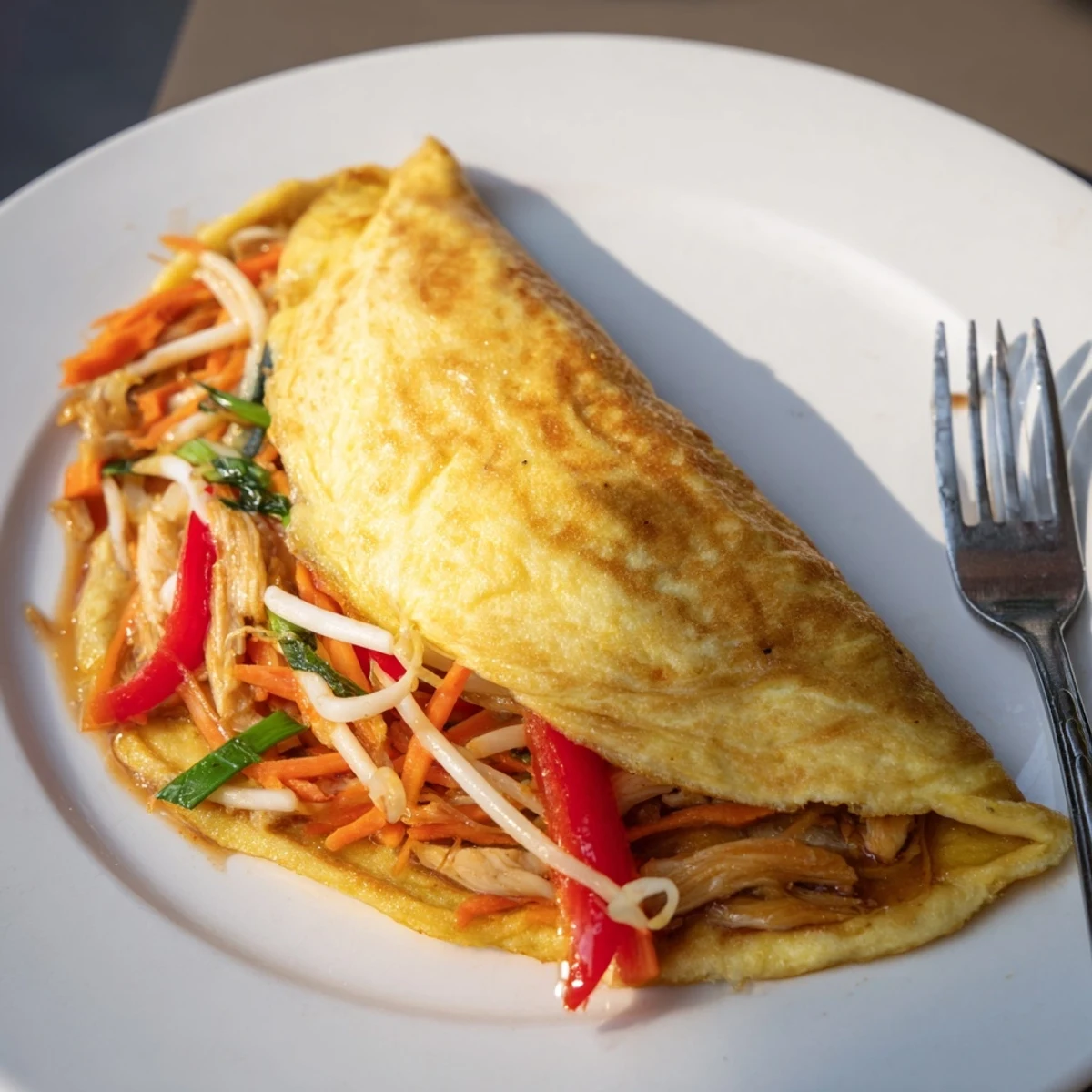
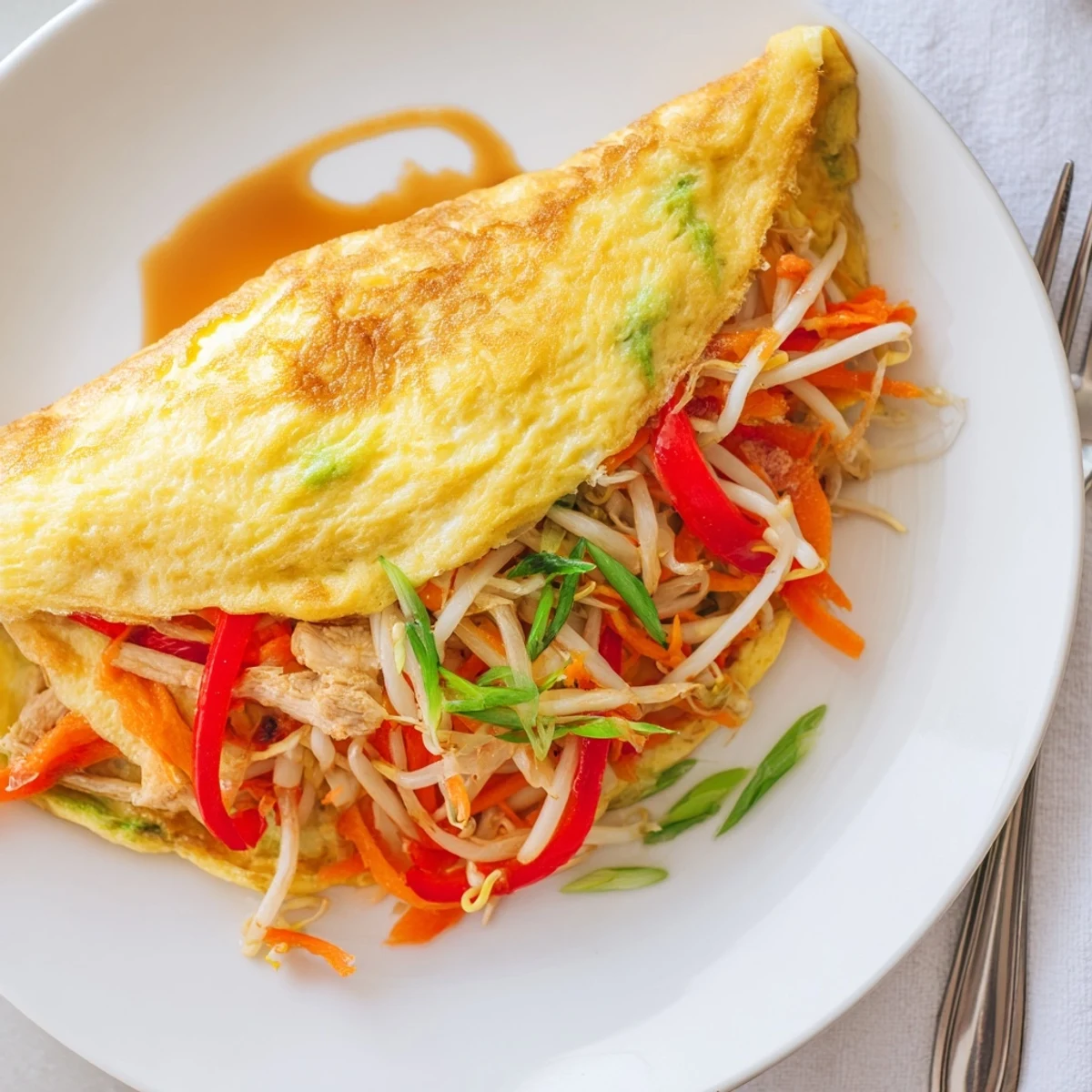
 This Chinese omelette brings together fluffy beaten eggs with a colorful stir-fried filling of julienned carrot, bell pepper, spring onions, and bean sprouts. Tender shredded chicken adds protein, while soy sauce and sesame oil deliver authentic flavor.
Ready in just 20 minutes from start to finish, it's an ideal choice for busy mornings, a quick lunch, or a light dinner. The technique involves cooking the vegetables separately before folding them into a perfectly set omelette.
Serve with jasmine rice and a soy dipping sauce for a complete meal.
The sizzle of eggs hitting a screaming hot wok is one of those sounds that instantly transports me back to my grandmothers tiny kitchen in Taipei, where she made omelettes that were nothing like the pale, folded things I grew up eating at diners.
I once made this for a roommate who claimed she hated eggs, and she quietly finished the entire omelette before admitting maybe she just hated boring eggs.
Ingredients
- 4 large eggs: The foundation of everything, and fresher eggs genuinely give you a fluffier, more cohesive omelette.
- 100 g cooked chicken breast, shredded: Optional, but a brilliant way to use up leftover rotisserie chicken from last nights dinner.
- 1 small carrot, julienned: Cut them thin and uniform so they soften quickly alongside the other vegetables without turning mushy.
- 2 spring onions, finely sliced: Added both to the filling and a handful saved raw for garnish, because the sharp fresh bite on top matters.
- 1/2 red bell pepper, thinly sliced: The sweetness balances the salty depth of soy sauce beautifully.
- 50 g bean sprouts: Toss them in at the last possible second so they keep their satisfying crunch.
- 2 tbsp soy sauce: Divided between the egg mixture and the vegetables, it seasons everything from the inside out.
- 1 tsp sesame oil: A small amount goes a long way and gives that unmistakable toasted, nutty fragrance.
- 1/4 tsp white pepper: Gentler and more complex than black pepper, it is the quiet secret behind most Chinese egg dishes.
- 2 tbsp vegetable oil: Used in two stages, first for the vegetables and then for the eggs, so nothing sticks and everything gets a slight crispy edge.
Instructions
- Beat the eggs with soul:
- Crack all four eggs into a bowl, pour in the soy sauce, sesame oil, and white pepper, then whisk aggressively until you see bubbles and the color turns a warm amber.
- Sear the vegetables:
- Heat one tablespoon of oil in a non stick pan over medium high heat until it shimmers, then toss in the carrot, bell pepper, spring onions, and bean sprouts, stirring constantly for two to three minutes until everything is crisp tender and fragrant.
- Warm the chicken:
- Add the shredded chicken to the vegetables, stir it through for about a minute just to heat it, then scoop everything out onto a plate and set it aside.
- Pour and spread the eggs:
- Wipe the pan if needed, add the remaining oil, pour in the beaten eggs, and tilt the pan around so the mixture coats the bottom in an even thin layer.
- Lift and let flow:
- As the edges start to set and puff slightly, gently lift them with a spatula and tilt the pan so the runny egg on top flows underneath to cook directly on the hot surface.
- Fill and fold:
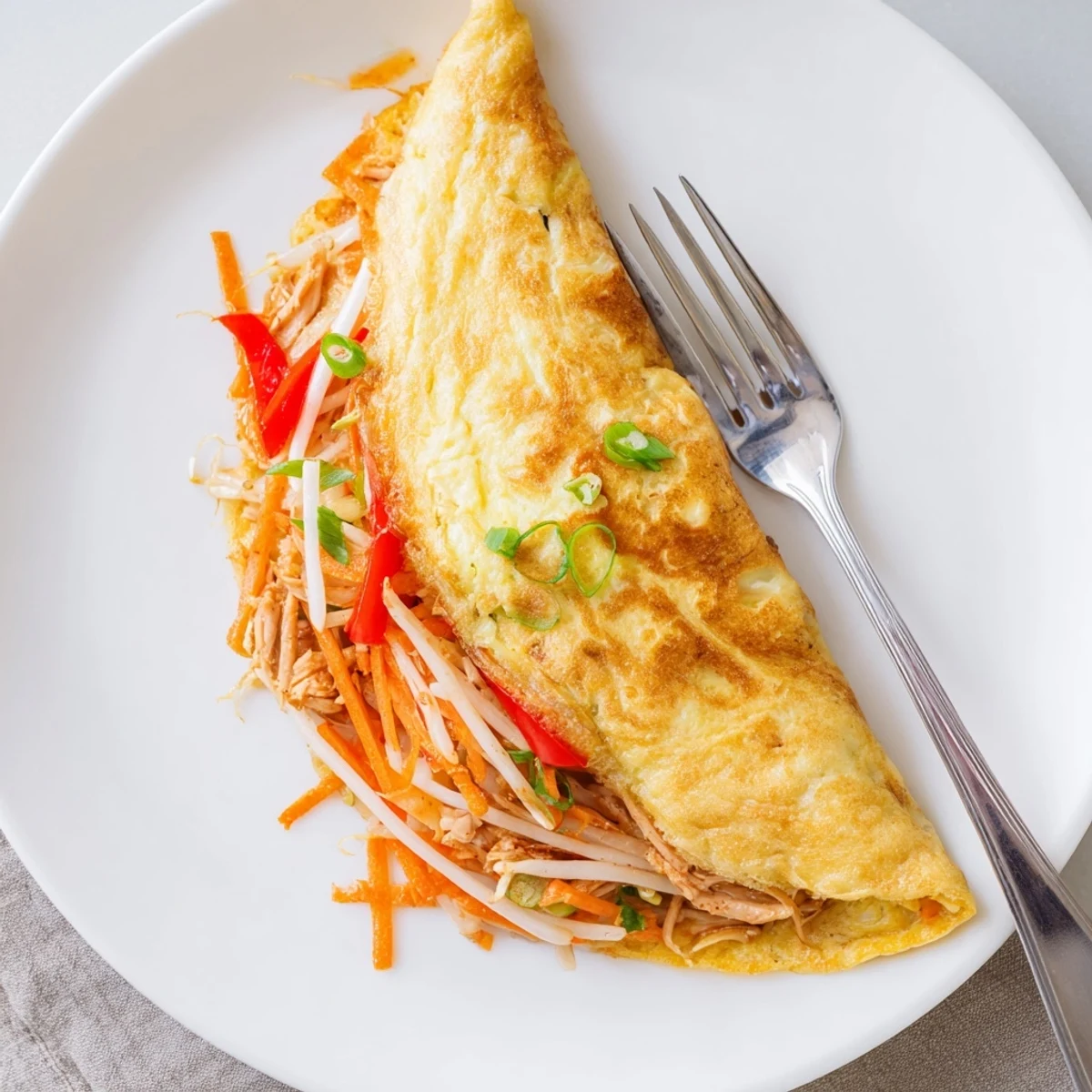
- When the omelette is mostly set but still glistening with moisture on top, spread your vegetable and chicken mixture over one half, then carefully fold the other half over it like a blanket and cook for one final minute.
- Serve immediately:
- Slide it gently onto a warm plate, scatter raw spring onions on top if you saved some, and bring it to the table before the steam stops rising.
 Save to Pinterest
 There is something quietly perfect about a folded omelette on a rainy Tuesday evening, steam curling up from the plate, no fanfare required.
What to Serve Alongside
This omelette is hearty enough on its own but truly shines next to a small bowl of steamed jasmine rice, which soaks up any soy sauce that escapes from the filling.
Making It Your Own
Swap the chicken for cooked shrimp or cubed firm tofu and you have an entirely different meal that still respects the original spirit of the dish.
Storing and Reheating
Omelettes are always best straight from the pan, but if you end up with leftovers they will keep well in the fridge for up to a day.
- Reheat gently in a dry non stick pan over low heat rather than using a microwave.
- A dash of chili oil drizzled over the top when serving can revive leftovers beautifully.
- Always remember that the texture will soften, so embrace it and enjoy a different but still delicious experience.
 Save to Pinterest
 Once you master this technique, you will find yourself folding all sorts of leftovers into omelettes and calling it dinner without a second thought.
Recipes Q&A
- → Can I make this Chinese omelette without chicken?
-
Yes, you can skip the chicken entirely or replace it with tofu, cooked shrimp, or mushrooms. The omelette is equally satisfying with just vegetables and the flavorful soy-sesame seasoning.
- → What type of pan works best for this omelette?
-
A non-stick frying pan is ideal for achieving a smooth, evenly cooked omelette that releases easily. An 8 to 10-inch pan works well for 4 eggs and gives you the right thickness for folding.
- → How do I keep the vegetables crisp inside the omelette?
-
Stir-fry the vegetables for only 2 to 3 minutes over medium-high heat. They should remain slightly tender but still have a bite. Overcooking them before adding to the eggs will result in mushy filling.
- → Is this Chinese omelette gluten-free?
-
Yes, as long as you use gluten-free soy sauce (tamari works great). All other ingredients in this dish are naturally gluten-free, including the eggs, vegetables, chicken, and sesame oil.
- → Can I add more spice to this omelette?
-
Absolutely. A dash of chili oil, sriracha, or red pepper flakes added to the egg mixture elevates the heat. You can also incorporate fresh chopped chili into the vegetable stir-fry for a bolder kick.
- → How do I prevent the omelette from tearing when folding?
-
Make sure the eggs are mostly set but still slightly moist on top before adding the filling. Use a wide spatula and gently fold one half over the other. Cooking over medium-high heat rather than high heat helps achieve the right consistency without browning too quickly.